
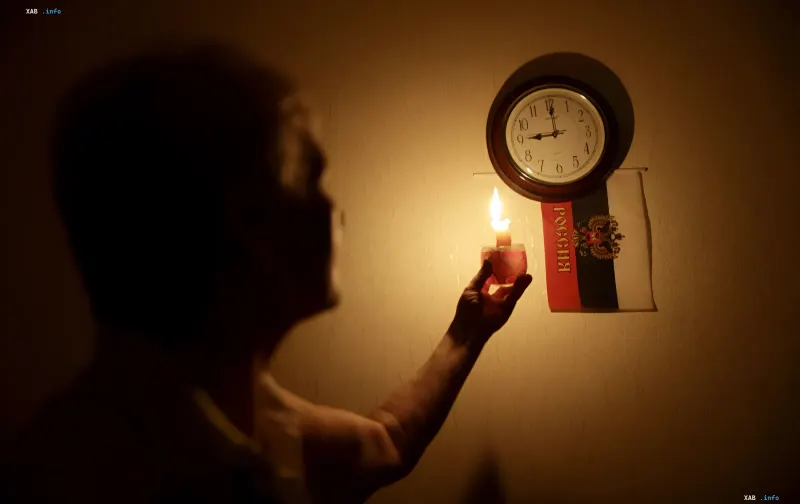
The situation regarding power and water supply on the Crimean Peninsula, occupied by Russian troops, has reached a critical point. For the third day in a row, a significant portion of the territory remains without electricity and water. On the night of July 8, the Armed Forces of Ukraine (AFU) launched new strikes against the region's energy infrastructure, exacerbating the already difficult situation for the population.
Widespread Blackouts and Resource Deficits
According to data from the government of the occupation administration in Crimea, on Wednesday, the cities of Yevpatoria, Dzhankoy, as well as the Dzhankoy, Krasnoperekopsk, and Krasnoperekopsk districts were left completely without electricity. The situation remains unstable in Kerch: the city is once again without power, despite the occupation authorities reporting a resumption of electricity supply the day before. In other districts of the peninsula, energy is being supplied partially, depending on the current capabilities of the damaged grid.
The issue of water supply remains critical. The Russian occupation state enterprise "Voda Kryma" reported a complete cessation of water supply in a number of settlements. The following areas are left without water:
- Dzhankoy, Krasnogvardeysky district, Kerch, and adjacent territories;
- Yevpatoria and Yevpatoria district;
- Krasnoperekopsk and Krasnoperekopsk district;
- Kirovsky and Leninsky districts;
- Some districts of Simferopol and nearby settlements;
- Alushta urban okrug, Yevpatoria, Bakhchisarai, Belogorsk, Nizhnegorodsk, Yevpatoria, and Feodosia districts.
Strikes on Infrastructure and the "Shadow Fleet"
Robert Brovdi, Commander of the AFU Unmanned Systems Forces, confirmed that on the night of July 8, Ukrainian troops struck six substations on the peninsula. According to him, over the past night, operators struck 53 military targets in Crimea and the southern parts of other occupied territories.
Over the last 72 hours, Ukrainian forces also struck a ferry in Kerch, a cargo ship, and 19 tankers of Russia's so-called "shadow fleet." From July 1 to July 8, AFU drones struck 50 energy nodes on the peninsula. Data from the monitoring Telegram channel Exilenova+, citing the NASA FIRMS fire map, recorded two fires: at the "Nizhnegorodskaya" substation (90 km from Simferopol) and at the "NS-3" substation (near Kerch). A representative of the Conflict Intelligence Team (CIT) noted that claims of strikes on tankers and substations appear credible.
Public Reaction and Authorities' Stance
Over Sevastopol on the night of July 8, according to the "chairman" of the city's occupation administration, Mikhail Razvozhayev, 27 drones were shot down. However, the occupation authorities of Crimea have not provided official reports on downed drones in other regions of the peninsula.
Residents of Crimea have been leaving complaints under officials' posts for several days in a row. They report the inability to buy food and contact relatives, demanding the introduction of a clear schedule for power outages. People note that they are not receiving truthful information about the real situation.
In particular, residents of Razdolnoye and the Razdolnensky district report that there has been no electricity since Saturday, and water was turned on only once — for an hour or slightly more. Purchased products have spoiled, and new supplies are not reaching stores. Individual comments express dissatisfaction with the fact that the authorities are ignoring the suffering of the population: "People in Crimea are suffering, and we are all talking about holidays. There is no gas in the villages, bottled gas is also problematic, and now the lights are being turned off whenever they feel like it".
Context of Escalation
Since the beginning of July, the AFU Unmanned Systems Forces have been conducting a massive campaign of strikes against the energy infrastructure of occupied Crimea. In just the first two days of the month, drones struck 12 substations, and by July 6, the total number of damaged energy facilities on the peninsula and in the Donbas had grown to 37. It was on July 6 that a massive blackout began in Crimea, leaving several districts without light, communication, and water.


