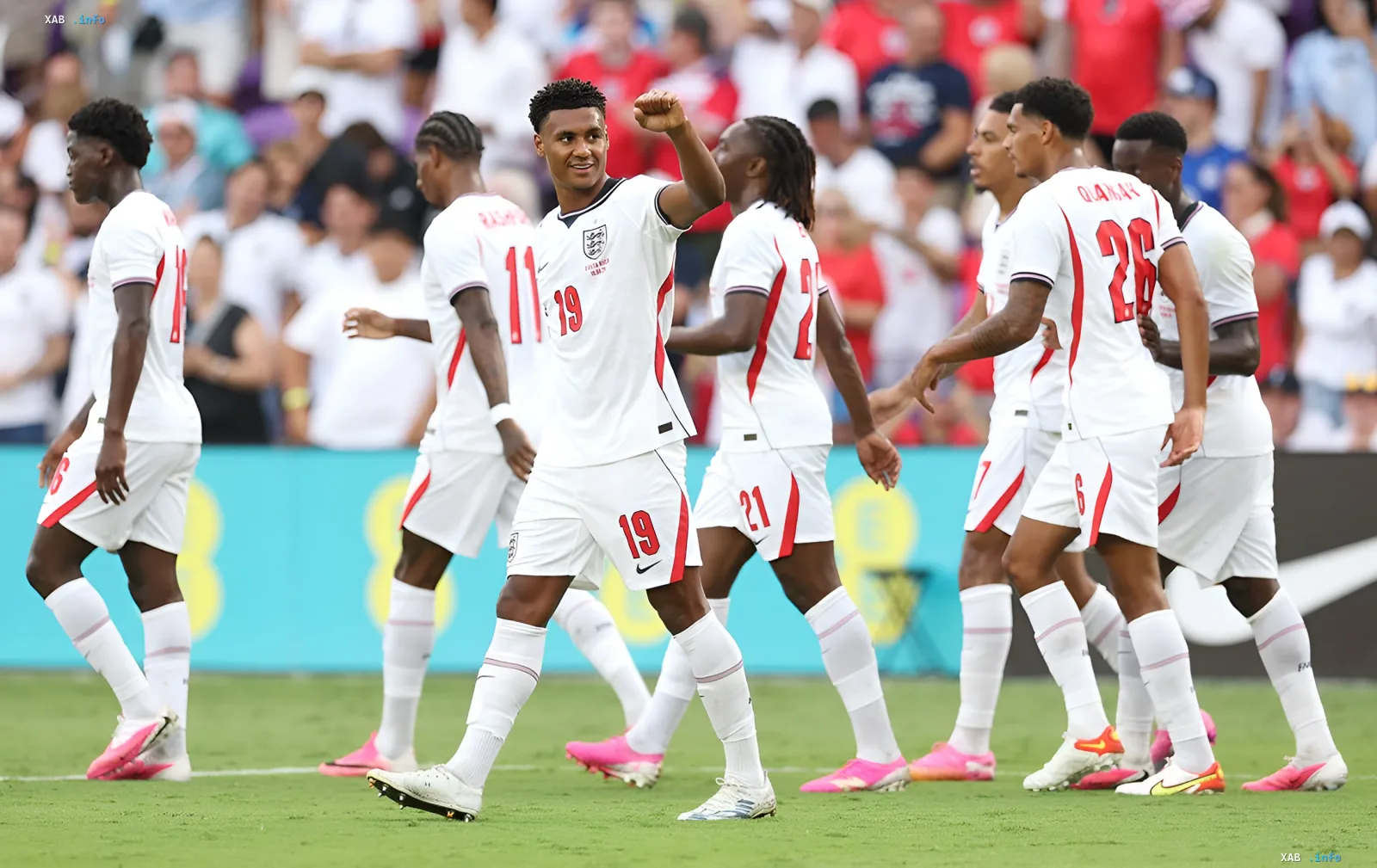
On June 17, the World Cup will host a match that will kick off the group stage in Group L. Two teams with rich histories and ambitions will meet: England and Croatia. This clash will be the opening act in a group that also includes Ghana and Panama.
Croatia: Experience and Character
The Croatian national team is one of the most successful squads in the history of modern World Cups. Over the last two tournaments, the "checkered" team became medalists, winning two bronze and one silver medal. Local fans are accustomed to high results and expect a worthy performance from the team this time as well.
Zlatko Dalić's charges overcame the qualifying stage without problems, taking first place in their group with the Czech Republic, Montenegro, the Faroe Islands, and Gibraltar. The core of the team remains unchanged: experienced Ivica Perišić and Mateo Kovačić, as well as the legendary Luka Modrić, who will turn 40 this year, are ready for battle again.
However, the Croatians do not rely solely on veterans. The squad includes players in their prime: Marco Gvardiol and Josip Stanišić. The coach also has talented young players in reserve — Sučić, Baturić, and Vušković — who could make a loud statement on the world stage.
England: Strength and Squad Depth
The English national team also passed the qualifying stage without problems, achieving a 100% result in all matches and not conceding a single goal. The team crushed Albania, Serbia, Latvia, and Andorra, demonstrating power and reliability.
The depth of the "fathers of football's" squad is staggering: sitting on the bench are players who would be leaders in most other national teams. The team has stars for every taste — from Jude Bellingham to Harry Kane. The competition is so high that even players like Phil Foden and Cole Palmer did not make Thomas Tuchel's final squad.
Despite England being a regular participant in World Cups, their only gold was won at a home tournament in 1966. Since then, 60 years have passed, and the British have not been able to repeat this success. For the current generation, advancing from the group stage or succeeding in the early knockout rounds is just the beginning of the journey. On the British Isles, a podium finish is expected, and ideally, for Thomas Tuchel to "bring football home".
Ghana: Hope for Repeating Success
The Ghanaian national team is striving to repeat the success of 2010, when the team reached the quarter-finals but lost to Uruguay in a penalty shootout after a dramatic handball incident by Luis Suárez. The team arrived in North America after a storm: a failure in AFCON qualification and a series of crushing defeats in friendly matches cost Otto Addo his job. Now the team is led by the 73-year-old Carlos Queiroz, who must restore order and find the right approach to the players.
The team's main star is 26-year-old Antoine Semenyo, who just had a solid season in the Premier League for Manchester City. The coach also has other bright players at his disposal: Thomas Partey and Iñaki Williams from La Liga, as well as the experienced Jordan Ayew from Leicester, who will be responsible for the fighting spirit on the field.
Panama: Debut in the New Format
The Panamanian national team will play in the World Cup for the second time in history. The first debut took place in 2018, and now the team has qualified for the tournament thanks to the new format and direct spots for the hosts (USA, Canada, and Mexico). The main architect of this success is the 53-year-old Spanish-Danish Thomas Christiansen, who managed to squeeze the maximum out of the available resources.
Group L promises to be one of the most intriguing at the World Cup. England and Croatia are the favorites, but Ghana and Panama can deliver surprises. All teams are ready to fight, and spectators will see bright football and top-level emotions.


