
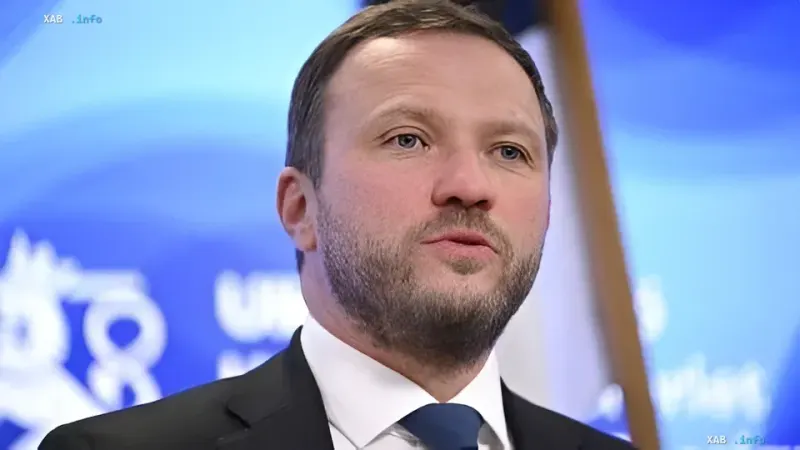
Estonian Foreign Minister Margus Tsahkna has articulated Tallinn's position regarding incidents involving unmanned aerial vehicles (UAVs) in the airspace of NATO countries. In an interview with the Financial Times, published on June 29, 2026, the diplomat stated that instances of Ukrainian drones falling on alliance territory are acceptable collateral damage. According to him, this is the price for Kyiv conducting air operations against Russian military targets and oil refining infrastructure.
Economic Rationale and Strikes on Logistics
Tsahkna emphasized that, despite the lack of official approval for uncontrolled incursions of equipment into the airspace of allies, NATO countries do not intend to demand that Ukraine cease its attacks. The diplomat pointed out that these actions strike at key logistical and economic hubs of the Russian Federation.
As an argument, the head of the Estonian Foreign Ministry cited data on the critical vulnerability of Russia's export routes through the Baltic Sea. According to his assessment, up to 60% of Russia's oil exports pass through the Gulf of Finland. The intensification of strikes on objects of the fuel and energy complex (FEC), including the attack on the Moscow Refinery on June 18, 2026, led to a change in the rhetoric of the Russian leadership against the backdrop of growing economic pressure.
Airspace Incidents and Moscow's Position
During the period from 2025 to 2026, technical incidents related to the fall of UAV debris or their interception were recorded on the territories of the Baltic states and Finland. Thus, in June 2026, an unidentified drone was shot down over Latvia by the Baltic Air Policing mission.
The Russian side has repeatedly characterized such flight trajectories as provocative factors threatening regional security. Moscow has also leveled accusations against the Baltic states, suggesting their assistance in guiding drones or providing an air corridor. Official Tallinn rejected these claims as unfounded.
For its part, NATO insists that the incidents are unintentional and technical in nature. The alliance links the deviation from course to the work of electronic warfare (EW) systems or loss of control, excluding the direct involvement of NATO infrastructure in the launch of these means.
Diplomatic Context
According to assessments by the Estonian Ministry of Foreign Affairs, Moscow's attempts to initiate negotiation processes in the current period are viewed as a tactical move. The goal of such initiatives, in the opinion of the Estonian side, is to stabilize the internal economic situation and seek temporary compromises in conditions of constant pressure on the country's energy sector.


