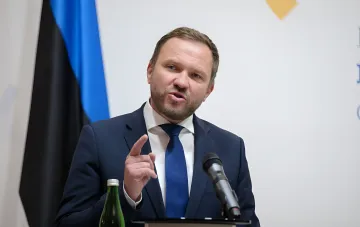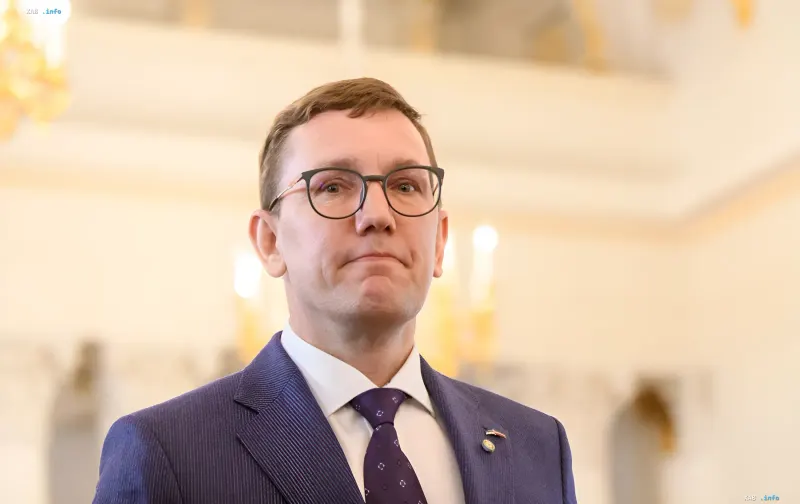
Russian hybrid operations, according to Tallinn's assessment, have gone beyond routine sabotage and disinformation campaigns, turning into systematic pressure on a number of European states. This was stated by Estonian Prime Minister Kristen Michal in an interview with the British newspaper The Guardian, published amid a rising number of incidents that European authorities link to Moscow's actions. According to Michal, the European Union's response is influenced by several dangerous events that have occurred over recent weeks and months: an assassination attempt in Denmark, a thwarted terrorist attack in Leipzig, Germany, an attempted arson attack on a drone manufacturing plant in Estonia, as well as instances of Russian missiles and drones breaching Polish airspace.
The link between the frontline and hybrid pressure
The Estonian prime minister emphasized that European leaders are increasingly understanding the cause-and-effect relationship between the situation on the frontline in Ukraine and Russia's actions beyond its borders. «If the Kremlin cannot achieve success in the war, its hybrid operations against other countries become more dangerous», Michal noted. This logic, he said, explains why the intensity and nature of incidents in Europe are escalating precisely during periods when Russian troops face difficulties on the Ukrainian front. Thus, hybrid pressure is viewed not as a set of isolated incidents, but as a tool to compensate for military failures.
Border closures and the Threod Systems incident
Against the backdrop of these events, Estonia decided on Tuesday to close all border crossings with Russia. As Michal reported, this measure was a response to an incident at the Threod Systems enterprise near Tallinn, which produces drones. This is already the second sabotage attempt on an Estonian defense enterprise that authorities have linked to Russia. The prime minister did not specify what additional measures Tallinn might introduce in response to such actions, limiting himself to stating the decision to close the borders.
Direct attack unlikely, but the threat remains
At the same time, the head of the Estonian government considers a direct armed attack by Russia on his country to be unlikely. He explained this by the fact that Moscow is well aware of the significantly greater military potential of the European Union and NATO compared to what was available to the Alliance at the start of the full-scale war. However, according to Michal, the absence of the risk of direct military aggression does not mean the threat has disappeared: he did not rule out new hybrid attacks and disinformation campaigns that could be directed against European states in the near future.
Neighbors' reaction and Kyiv's warning
Tallinn's position is reinforced by statements from other European leaders. On November 25, Latvian President Edgars Rinkēvičs stated that Moscow is expanding the spectrum of hybrid actions against European countries, and NATO has yet to devise an effective response to these provocations. In turn, Ukrainian President Volodymyr Zelenskyy warned that halting or reducing aid to Ukraine could lead to a further intensification of Russian hybrid attacks against European countries. Among the states already facing such actions by Moscow, he named Moldova, Romania, Bulgaria, Germany, Finland, and Denmark. The totality of these statements forms a picture in which Russia's hybrid pressure is perceived as a multi-vector and growing threat to the security of the entire European space.