On Saturday, November 21, 2026, the European Union and Indonesia officially approved a comprehensive trade and investment agreement, the result of ten years of negotiations between the two sides. The document provides for the elimination of 98.5% of customs duties on goods entering the Indonesian market from EU countries. As noted in a European Commission press release, the agreement will "create new opportunities for businesses on both sides and bring significant economic benefits." The Commission predicts that EU exports to this major Southeast Asian country will grow by nearly 40% over the next 15 years.
Economic impact: 600 million euros in annual savings
According to European Commission calculations, the new deal will allow EU exporters to save more than 600 million euros annually in customs duties. The agreement will be particularly beneficial for a number of sectors, including machinery and automotive manufacturing. Furthermore, the document will open up new investment opportunities in Indonesia in promising sectors such as electric vehicle production, electronics, and pharmaceuticals. For European businesses, this means access to the market of a country that is the largest economy in Southeast Asia and the fourth most populous in the world.
Trade balance: 8.5 billion euro EU deficit
The volume of bilateral trade between the EU and Indonesia in 2025 was estimated at 28.9 billion euros. EU exports to Indonesia totaled 10.2 billion euros, while imports from Indonesia to the EU reached 18.7 billion euros. Thus, the trade balance is significantly skewed in favor of Jakarta, and the elimination of tariffs is seen as a tool to balance flows and stimulate growth in European exports in the Asian direction.
Von der Leyen: “one of the most ambitious EU deals in Asia”
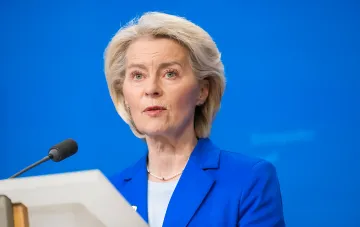
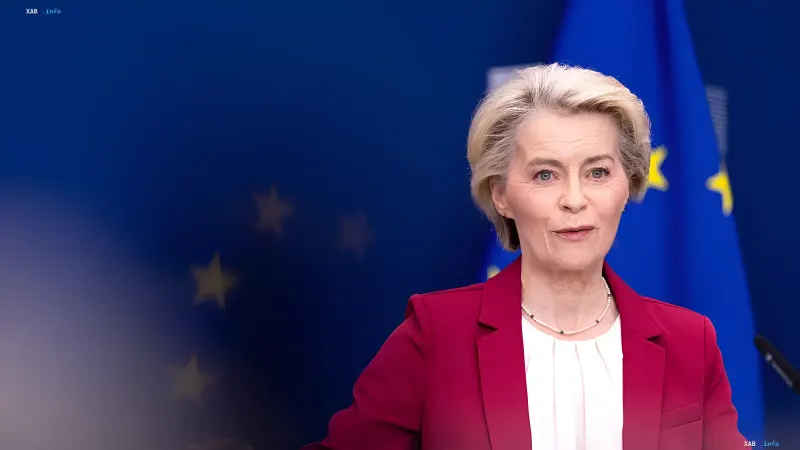
Speaking ahead of the signing ceremony, European Commission President Ursula von der Leyen called this day “a landmark moment for the EU and Indonesia.” According to her, the agreement is “one of the most ambitious deals the European Union has ever concluded in Asia.” “It connects our union of 450 million people with the largest economy in Southeast Asia and the world’s fourth most populous country,” the Commission head emphasized. Von der Leyen added that the elimination of tariffs on “almost all trade between us” will unlock new opportunities for European and Indonesian companies, farmers, workers, and especially for small businesses.
Path to entry into force: ratification in parliaments
Despite approval at the government and commission levels, the agreement has not yet entered into force. The European Parliament must conduct its own approval procedure, and Indonesia will carry out internal ratification processes. If all stages are successfully passed, the documentation could start applying as early as the beginning of 2027. Thus, before the actual launch of the agreement's mechanisms, the parties must complete a number of formal procedures, which could take several months.
Strategic context: EU strengthens positions in the APAC region
The signing of the agreement with Indonesia fits into the European Union's broader policy of deepening economic ties with the Asia-Pacific region. Amidst growing competition for investment flows and sales markets between global blocs — the EU, the US, and China — the deal with Jakarta allows Brussels to secure a privileged status in a market of over 280 million people. For Indonesia, in turn, the agreement consolidates its status as a strategic EU partner and creates predictable conditions for attracting European investment into high-tech sectors.