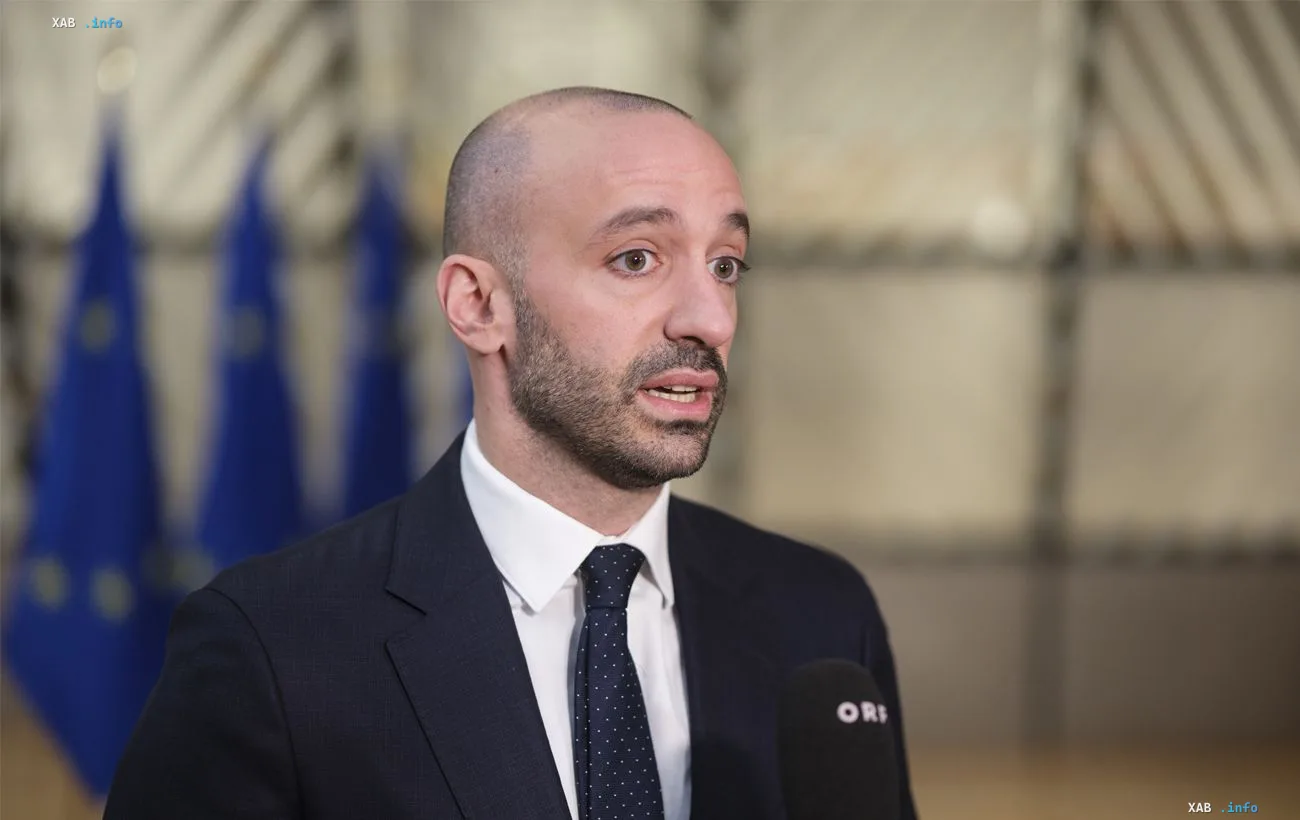
France's Minister-Delegate for European Affairs, Benjamin Addad, made a sharp call to European capitals in an interview with RBC-Ukraine: Brussels is time to abandon its rigid attachment to the consensus of all 27 member states and move to more flexible formats of joint action. In his words, it is precisely this approach that will allow Europe to accelerate its own rearmament, integrate the single market, and preserve its capacity to provide sustained support to Ukraine. Addad emphasized that among European leaders "a sense of the urgency of security needs has finally emerged, one that was lacking just a few years ago, in particular in 2019."
The "Coalition of the Willing" as a Model for the Entire EU
As a working example of successful non-consensus cooperation, Addad cited the "Coalition of the Willing" — a mechanism for supporting Ukraine that operates outside the formal procedures of the European Union. In this format, the decision to step up action is taken by individual member states, which, in the assessment of the French official, enabled countries not belonging to the EU but sharing common values to be drawn into the assistance effort. The United Kingdom, as well as Norway, Canada, Australia, and Japan, play a key role in supporting Kyiv, Addad noted. "Yes, we need to speed up. And I think we should be a bit more flexible in our actions," he stated.
Economic Integration Without Blockage: The "Six, Eight, Ten" Formula
A similar mechanism, Addad proposed, should be applied in the economic sphere as well, primarily to deepen the integration of the EU single market. If decision-making involving all 27 countries is blocked or unduly delayed, initiatives can be taken up by groupings of six, eight, or ten states. Such an "impulse," in the logic of the French minister, will create a domino effect and push the remaining countries to join. Addad directly linked this idea to the need to prevent the paralysis of European economic policy against the backdrop of geopolitical pressure.
Rearmament and Industrial Projects: Who Sets the Pace
In the security sphere, Addad proposed adopting the same principles: individual countries can jointly implement large-scale industrial projects, take on leadership, and set the pace for rearmament. He emphasized that this is not about competition within the EU, but about creating "locomotives" that will pull the rest along. The French politician pointed out that it is precisely this model that has already proven its effectiveness in the defense sector, where waiting for a unanimous decision of all 27 capitals would mean a practical loss of time amid the ongoing conflict in Ukraine.
The 2028–2034 Budget and the Future of Support for Ukraine
In the same interview, Addad reported that EU countries are currently discussing the European budget for 2028–2034, which, in his words, will provide significant financial support to Ukraine. In addition, he stated that France will continue to support Kyiv even after the end of Emmanuel Macron's presidential term, whose second term expires in May 2027. This statement is important in the context of debates over how sustainable European support for Ukraine is beyond the current political cycles.
Contradictory Data
No direct factual contradictions were found between the primary source (the RBC-Ukraine interview) and the additional contextual material (the RFI publication on the creation of an artillery coalition in Paris in January 2024). However, it should be noted that the RFI material relates to events of 2024 and describes an initiative by the French Minister of Defense, whereas Addad's statement was made in 2026 and reflects the evolution of the French position: from specific military coalitions to a systemic model of flexible intergovernmental cooperation in economics and security. The difference in chronology and level of abstraction is not a contradiction, but requires the reader to take the temporal context into account.