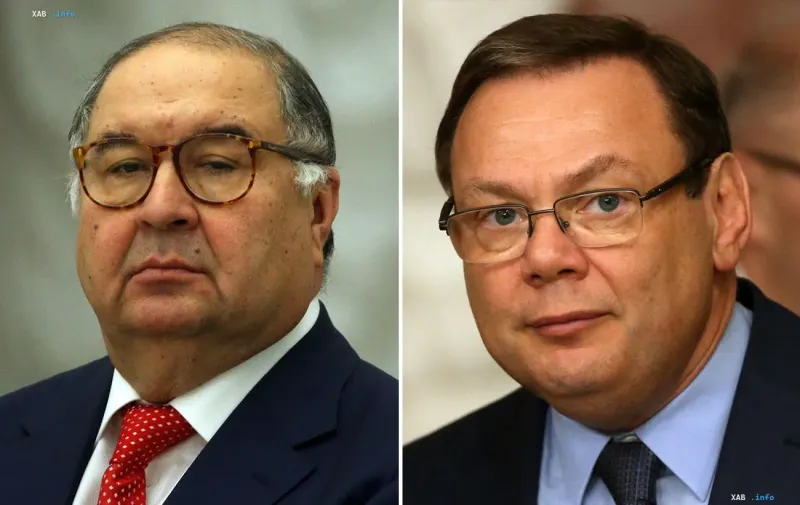
Inside the European Commission and the Council of the EU this week, the atmosphere is one that diplomats describe as a "bad aftertaste." As European media report, citing anonymous sources within the Brussels institutions, the decision to remove Russian oligarchs Alisher Usmanov and Mikhail Friedman from the sanctions lists was made under direct pressure from Paris, and today the EU openly acknowledges that it made a serious mistake. "This was the worst moment," one European publication quotes a diplomat who took part directly in the discussion. A second anonymous source in the bloc added that "no one is happy" with what happened the day before. According to the same source, to compensate for the situation, EU members decided to extend the existing sanctions against nearly 3,000 individuals and legal entities for 36 months.
Timeline: how France "bargained for" the oligarchs
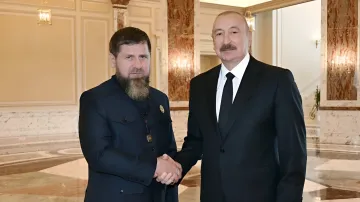
The decision to lift the sanctions against Usmanov and Friedman, it has emerged, was lobbied for by France as part of a diplomatic deal with Azerbaijan. Paris sought to secure the release of two French citizens held in custody in Baku. The very day after Usmanov was removed from the sanctions list, Azerbaijan pardoned and released the Frenchman Martin Ryan, who had previously been sentenced to ten years in prison on charges of spying for the French government. Thus, the EU's sanctions decision effectively became part of a bilateral bargaining process, which triggered a sharp reaction in Brussels and in Kyiv.
"Pandora's box": fears over a dangerous precedent
Despite the fact that France's desire to secure the release of its own citizens, as many European diplomats admit, "deserves understanding," it is precisely this aspect that has become the main source of alarm. In Brussels there is fear that Russian oligarchs and structures linked to them will begin to actively exploit a similar mechanism — that is, linking the lifting of European sanctions to the release of European citizens held in custody in third countries. According to EU sources, Paris may have opened "Pandora's box," creating a precedent that will be extremely difficult to close without undermining trust in the sanctions regime itself. Against this backdrop, the EU has once again raised the idea of introducing a qualified-majority mechanism for decision-making on sanctions, which would have to rule out the possibility of a single country blocking, or conversely, forcing the lifting of sanctions.
Estonia and Latvia: discord within the EU
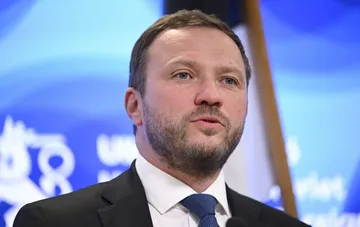
The Baltic states' reaction to the decision on Usmanov and Friedman has been, perhaps, the harshest. Estonia, as local and Ukrainian media report, has begun publicly demanding explanations from France over the controversial decision and, moreover, has decided to impose its own national sanctions against both oligarchs — effectively "plugging" the gap created at the EU level. The Prime Minister of Latvia, Krišjānis Kariņš (referred to as Braže in Latvian media in the context of the discussion), explained why his country withdrew its veto on Usmanov and Friedman; however, according to Latvian publications, he was shocked by the public reproaches directed at him by the Estonian Foreign Minister, Marko Kulberg. Kulberg, in particular, asked: "Did we need to lift the sanctions on Usmanov before anyone else?" — pointing to Tallinn's growing irritation toward Paris.
Kyiv and the future of the sanctions regime
President Volodymyr Zelenskyy's team, according to available information, is already actively working with EU countries to restore sanctions pressure on Usmanov and Friedman. The Ukrainian side views what happened as an unacceptable weakening of the sanctions perimeter and, it seems, intends to seek at least compensation at the national level of individual countries. In Brussels, meanwhile, discussions are underway not only on extending sanctions against nearly 3,000 individuals for 36 months, but also on systemic changes to the procedure for adopting and lifting restrictions, so as to rule out future situations in which a single country could effectively "bargain for" the lifting of sanctions for specific persons within the framework of bilateral negotiations with third states.