August 13, 2026 — According to a fresh report by the Kiel Institute for the World Economy, published today, military aid to Ukraine reached a historic high in June 2026, not seen since April 2024 — €7.2 billion. However, behind this impressive figure lies a complex reality: Europe is attempting to compensate for a complete break in US funding, but cannot fully eliminate technological dependence on the American defense industry.
A Record Amidst a "Financial Drought"
The surge in aid in June was a reaction to a critical situation that arose after the US completely ceased direct funding of military support for Ukraine in February 2025. Prior to this, the average monthly volume of aid from all donors was €3.46 billion. After the withdrawal of American funds, this figure dropped to €2.94 billion. The June peak of €7.2 billion is not a sign of stable growth, but a one-off large transaction designed to close a cash-flow gap.
The "Ukraine Support Loan" Mechanism and Country Contributions
The key driver of the June record was the launch of the EU's large-scale macro-financial program, the Ukraine Support Loan. The total volume of this credit program for 2026–2027 is €90 billion. In May and June, European institutions urgently allocated the first €4.3 billion from this fund directly for military needs. In addition to the centralized fund, individual states made significant contributions: Germany allocated €700 million, Denmark €600 million, and the Netherlands €500 million.
European Money, American Guns
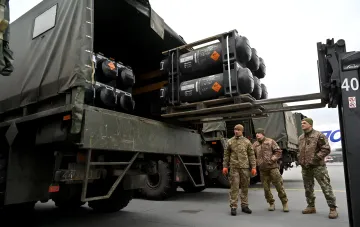
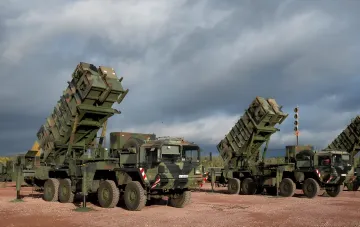
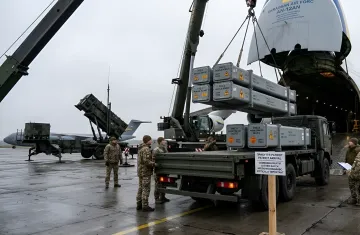
Analysts from the Kiel Institute, in particular Federico Mella, point out a paradox: although direct US budgetary injections have ceased, dependence on the US in the armaments segment has not disappeared. European countries are actively using their own funds to purchase weapons from American manufacturers or to pay for supplies from Pentagon stocks. The situation with air defense systems is particularly critical: Europe has still not created adequate replacements for American Patriot systems and their missiles, forcing them to purchase them from the US.
Shifting Priorities: Betting on Drones
The structure of military aid has undergone qualitative changes. Against the backdrop of a shortage of classic heavy weaponry, Europe has bet on unmanned technologies. In the first four months of 2026, drone financing reached a record €1.6 billion. For comparison: in 2022, only €400 million was allocated for these purposes. This indicates an attempt to compensate for the lack of artillery and tanks with high-tech solutions.
Contradictory Data
There is a discrepancy in the interpretation of the current situation. On the one hand, statistics record a "record" aid of €7.2 billion, which may create an illusion of full resource mobilization among the public. On the other hand, experts emphasize that long-term commitments and humanitarian support in the first half of 2026 faced reductions due to bureaucratic delays in Brussels. Thus, the financial record is targeted, while systemic support is experiencing difficulties with stability.