

European countries are at a crossroads: the desire for strategic autonomy clashes with the harsh reality of distrust in their own military capabilities. A fresh poll conducted by Public First in 24 EU countries has revealed a worrying split in public opinion. Continentals want to rely on their own strength, but they largely doubt that their armies are capable of providing it.
The Paradox of Independence
The study, results of which were reported by POLITICO, shows that Europeans are increasingly rejecting the idea of total dependence on foreign aid. Only 14% of respondents are willing to rely on military support from outside Europe, specifically from the US. At the same time, 40% of citizens prefer to rely on pan-European defense support.
However, behind the desire for independence lies deep skepticism. Opinions on the continent's actual readiness for defense are almost evenly split: 41% believe in Europe's ability to repel an attack, while 43% are convinced of the opposite. The situation becomes even more dramatic when looking at national armies. More than half of citizens (58%) believe their country is not ready for self-defense, and only 27% are confident in their armed forces.
Paying More for Security
Despite doubts, Europeans are willing to pay the price for sovereignty. 46% of those surveyed believe that EU countries need to deploy their own production of military equipment, even if this leads to a significant increase in defense procurement costs. This indicates an understanding of the need to create an independent industrial base capable of supplying the army without looking to external supplies.
Geography of Fear and Confidence
The level of confidence in own defense within the EU is uneven and directly depends on the geopolitical position. The greatest skepticism is recorded in frontline states bordering or close to Russia. In the Baltic states, Bulgaria, and Romania, citizens consistently advocate for maintaining the US military presence and NATO membership, understanding that without a powerful external ally, survival in the event of a conflict would be extremely difficult.
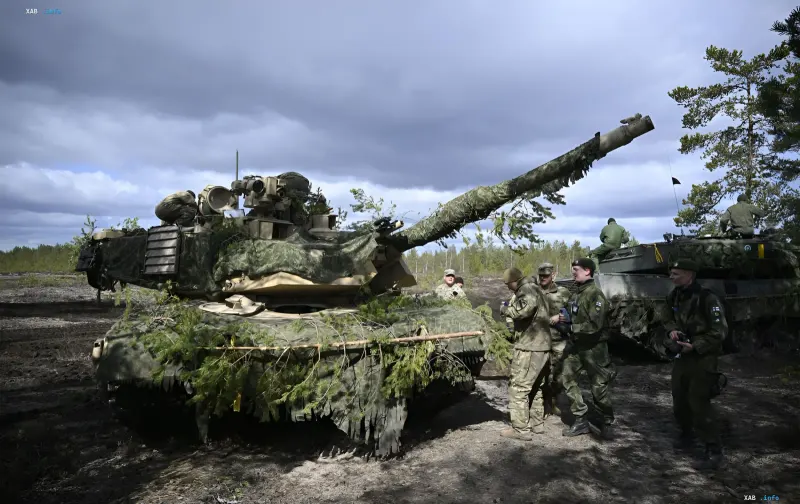
The only bright exception was Finland. An overwhelming majority of Finns (76%) are confident that their state is ready to fight on its own. This optimism is bolstered by decades of preparation for a Russian invasion scenario and the presence of a strong conscription system.
In total, only residents of six countries — Finland, France, Poland, Bulgaria, Romania, and Greece — believe that their state should be capable of fighting alone. France's confidence is also logical: it is the only nuclear state in the EU with a long tradition of military independence. In the other 18 countries, respondents agree to rely on a pan-European security umbrella.
Washington's Pressure and NATO Challenges
The issue of financing own security will be one of the most pressing topics at the upcoming NATO summit in Ankara. Despite the rhetoric of European politicians about strategic autonomy, the continent is critically dependent on American weapons, intelligence data, and logistical capabilities.
The situation is exacerbated by the position of the new US administration. Donald Trump is reducing the military presence in Germany and demanding that European allies take on the bulk of the costs for the conventional defense of the continent. In June, NATO Secretary General Mark Rutte made an urgent visit to Washington to smooth out disagreements with President Trump arising from European countries' stance on Iran.
After the negotiations, Rutte admitted that the Alliance must adapt to the new demands of the White House. He emphasized that NATO must protect not only allies in Europe but also the continental part of the US itself, ensuring Washington's decisive role on the world stage. For Europe, this means that the path to full independence will be long and painful, and the balance of power in the Alliance will be redrawn under the pressure of economic and political realities.


