
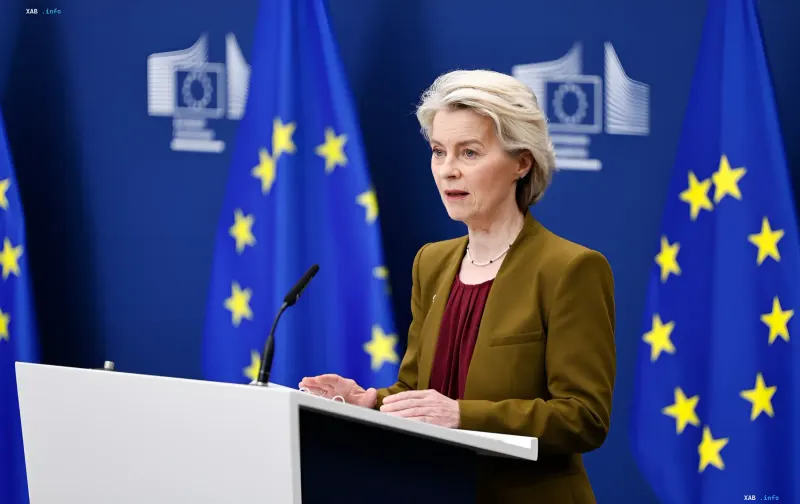
The European Union is revising its strategy for integrating candidate countries, moving to a strictly individual approach. Henceforth, the pace of progress towards membership will depend exclusively on the results achieved, rather than on political declarations or conditional calendar plans.
This was announced by the President of the European Commission, Ursula von der Leyen, following the "Moldova-EU" summit held on June 22. In her statement, the head of the European Commission emphasized that once the negotiation process begins, each country takes full responsibility for its own progress.
The principle of "merit" instead of abstract promises
According to von der Leyen, the reforms necessary for joining the Union differ for each candidate country. Therefore, the approach to assessing their implementation must also be personalized.
"As soon as the first cluster is opened, each candidate country is responsible for itself. Since they must carry out reforms — and they must carry out different reforms, depending on which candidate country we are talking about," she noted.
Responding to journalists' questions about the prospects for opening new negotiation blocks, the President of the European Commission emphasized the importance of a methodology based on merit (merit-based). She noted that this approach is much more effective for Moldova than using vague formulations like "as soon as possible".
"I believe that a merit-based process clearly points to the foundations of our methodology, which has been agreed upon by all 27 member states. This is much better for Moldova, because then they can achieve results, and we can fulfill our promise," explained von der Leyen.
The situation with Ukraine: the first step has been taken
Although the press conference was dedicated to the summit with Moldova, the announced principles fully apply to Ukraine as well. On June 15, 2026, Kyiv officially opened the first negotiation cluster "Foundations". This block covers critically important issues of the rule of law, the judicial system, fundamental rights and freedoms, as well as the functioning of democratic institutions.
In total, to obtain EU membership, Ukraine must pass through six negotiation clusters and bring national legislation into compliance with European norms. It is expected that the opening of the next five blocks will take place in the second half of 2026.
However, as emphasized in Brussels, further negotiation rates will depend on the implementation of reforms and support from all member states of the European Union. This means that the accession schedule will no longer be rigidly tied to dates, but will become a flexible tool responding to real changes in the legislation and institutions of candidate countries.


