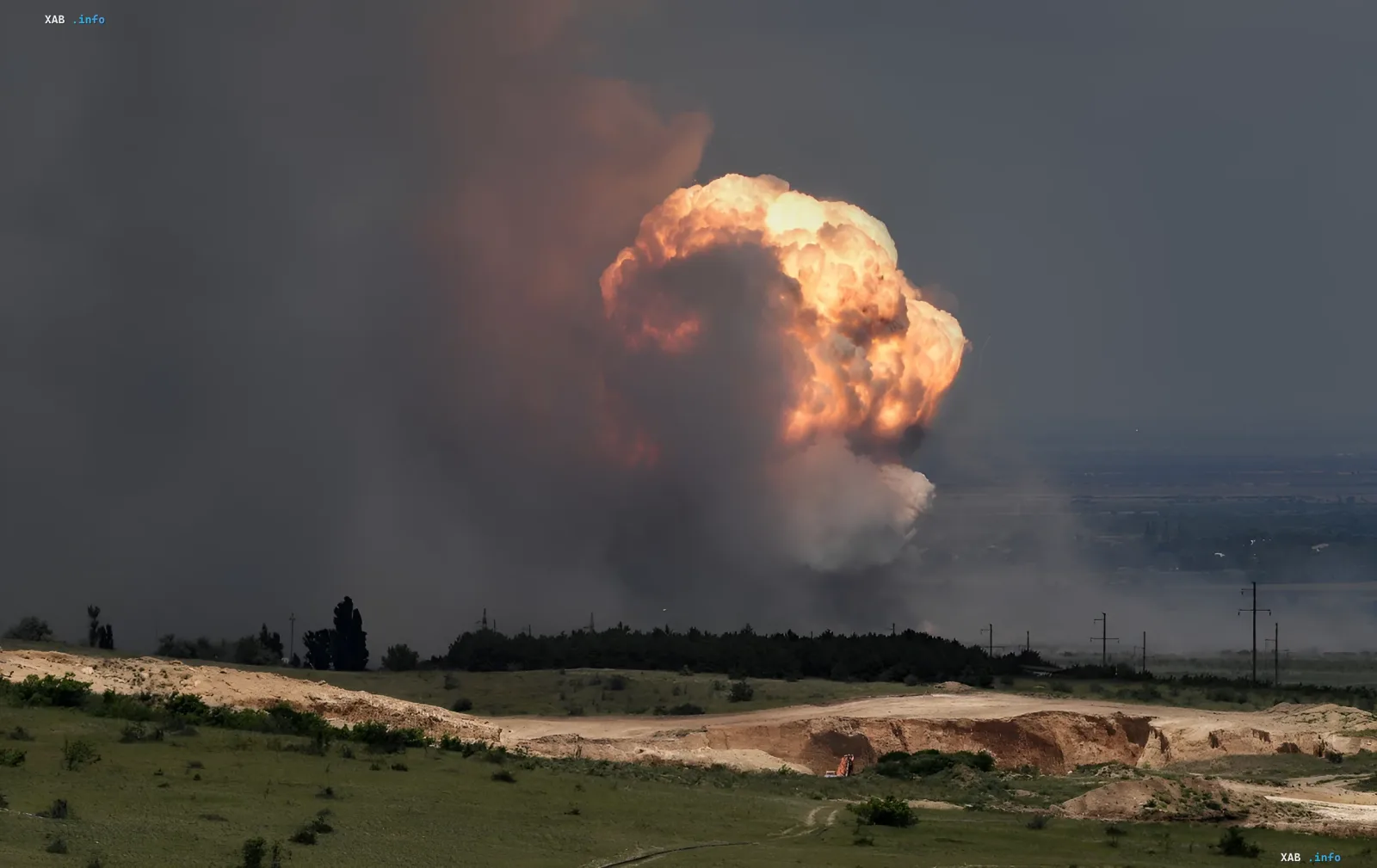
On June 23, a series of powerful explosions occurred in Crimea, resulting from a mass drone attack. The epicenter of the events was Kerch, where a major fire broke out at a combined heat and power plant (CHP) following the strikes. The incident led to a large-scale power outage, leaving a significant portion of the peninsula without electricity.
Confirmation of the fire and scale of consequences
Information about the fire at the CHP came from the Telegram channel “Crimean Wind” and was verified by monitoring groups. Preliminary data indicates that the strike hit a facility in the Arshintsy area. Witnesses and sources report hits on storage tanks, which triggered the fire.
Satellite imagery recorded a colossal smoke trail, extending up to 47 kilometers. A column of fire and thick smoke was visible from a considerable distance from the site, confirming the severity of the incident.
Response of occupation authorities and energy companies
Authorities controlling the peninsula, in their official statements, are attempting to conceal the real cause of the power outage. Press releases cite “technological violations in electrical networks.” However, eyewitnesses and monitoring data point to a direct hit on energy infrastructure.
Representatives of “Krymenergo” confirmed that emergency restoration work is underway at the scene. According to them, full restoration of power supply may take up to 24 hours.
Context of escalation: strikes on Crimea
The events of June 23 continued a series of attacks on the peninsula’s infrastructure. On the night of that day, Ukrainian Armed Forces struck the “Kavkaz” port and several other strategic facilities. As a result, traffic across the Crimean Bridge was suspended.
The day before, over the weekend, the peninsula had already suffered mass attacks. Gas stations, oil terminals, air defense nodes, and logistics centers were targeted. Current events in Kerch demonstrate the high intensity of hostilities in the region.


