
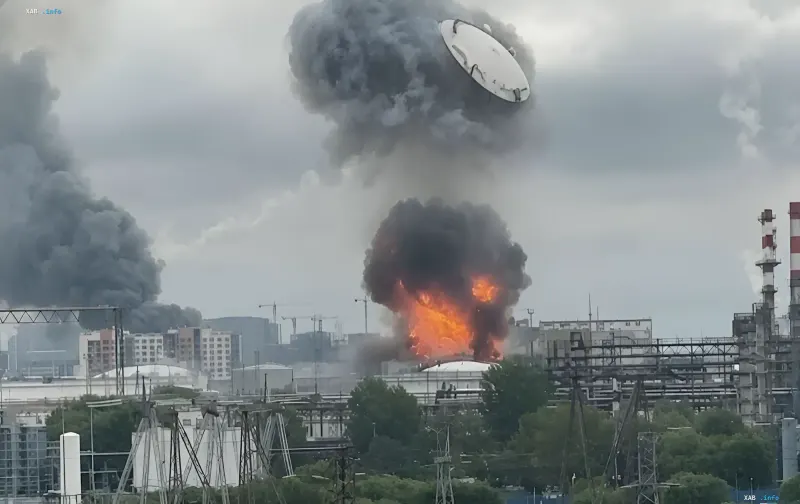
A sudden flare of fire and plumes of black smoke rising into the sky over an industrial zone — this is merely the visual reflection of a massive crisis engulfing Russia's energy infrastructure. As of the end of June 2026, Ukrainian defense forces have conducted a series of strikes that have radically altered the situation in the Russian petroleum products market.
According to data published by RBK-Ukraine citing the outlet 'Meduza,' eight out of ten of Russia's largest oil refineries (ORs) have been hit by drone attacks. The statistics of the damage appear unprecedented: in the European part of the country, there is not a single major industry enterprise that has not been attacked at least once.
Chain Reaction of Destruction
The attacks were not isolated incidents but systematic in nature. Some strategically important facilities, particularly plants in Moscow and Yaroslavl, have been subjected to shelling repeatedly since the beginning of 2026. The consequences have been critical: due to significant physical damage, many enterprises have been forced to either completely halt production or sharply reduce processing volumes.
Currently, among the top ten industry leaders, only two plants located deep in the rear, beyond the Urals, remain undamaged. These are the Angarsk Petrochemical Company in the Irkutsk region and the Omsk Oil Refinery, which is the largest in Russia.
Gasoline Crisis and Price Surge
The destruction of logistics chains and processing capacities has pushed the Russian fuel market into a deep crisis. Against the backdrop of shortages, gasoline prices have demonstrated the most rapid growth in the last two decades, becoming a shock for consumers and businesses alike.
The situation is exacerbated by the fact that dozens of regions have already introduced restrictions on fuel sales. Paradoxically, the Khanty-Mansi Autonomous Okrug — a region where about 40% of all Russian oil is produced — has also been included in the list of zones where an economy mode has been introduced. This indicates that the problem lies not in raw material extraction, but in the inability to process and transport it.
Attempts to Stabilize the Market
Understanding the threat to social stability, Russian authorities have taken emergency measures. Moscow has officially appealed to Kazakhstan with a request for the urgent delivery of 50,000 tons of AI-92 gasoline. Furthermore, previous restrictions within the country have been lifted, and Russian authorities have officially permitted the import of fuel from abroad, attempting to compensate for losses from the operation of domestic refineries.


