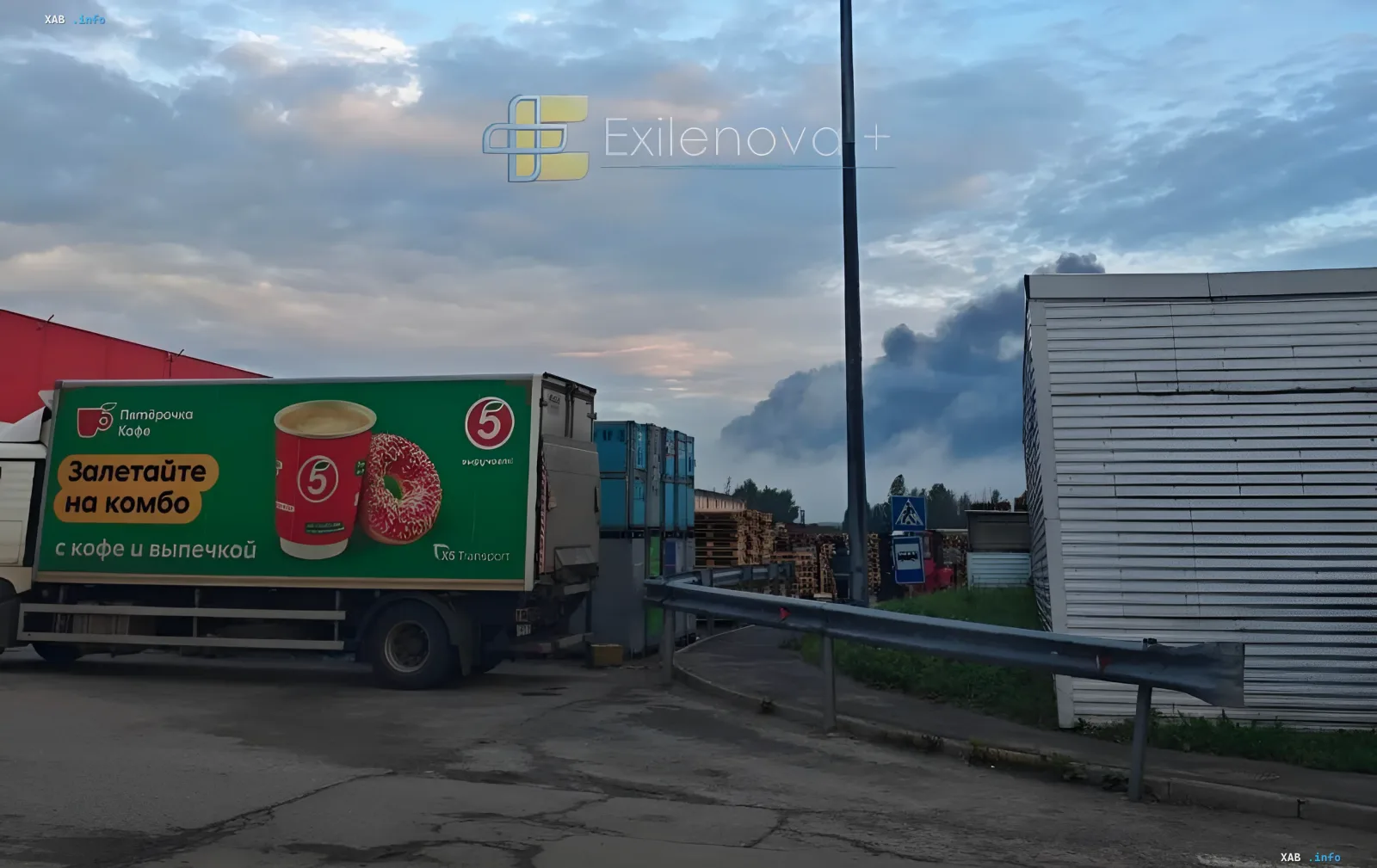
In the night of July 6, a series of powerful explosions rocked Yaroslavl. According to eyewitnesses and local residents, one of the region's largest industrial facilities—the 'Slavneft-YANOS' oil refinery (Novo-Yaroslavl Oil Refinery)—was hit. Footage from the scene has already appeared on social media, confirming the scale of the incident.
Scale of the Strike and Eyewitness Reaction
Local residents report that explosions on the enterprise's territory continued for several minutes in a row. The incident occurred at night, allowing drones to strike without encountering serious resistance. Witnesses describe the events as a successful attack on the region's critical infrastructure.
Strategic Importance of the Facility
The Novo-Yaroslavl Refinery is not just a local plant but one of the five largest refining giants in Russia. The enterprise's annual capacity allows for the processing of about 15 million tons of oil. The plant is a key asset of the NGK 'Slavneft' company, whose ownership structure is of huge importance to the Russian economy: 99.7% of the company's shares are owned equally by the state corporations 'Rosneft' and 'Gazprom'.
History of Attacks on the Facility
This incident is by no means the first strike on this strategic object. In May of this month, the plant had already become a target of drone attacks:
- May 19: The Governor of the Yaroslavl Region reported that the 'Slavneft-YANOS' plant might have been under attack.
- May 22: President Volodymyr Zelenskyy stated that Ukrainian drones attacked this refinery at night.
- May 25: An attack by unknown drones on Yaroslavl led to the closure of the exit towards Moscow.
- End of May: After a night strike by UAVs, an industrial zone with fuel facilities flared up in the city, which also blocked traffic for several hours.
Repeated attacks on this facility highlight its vulnerability and strategic importance in the current situation. The series of explosions on the night of July 6 has once again drawn attention to the security problems of industrial zones in central Russia.


