

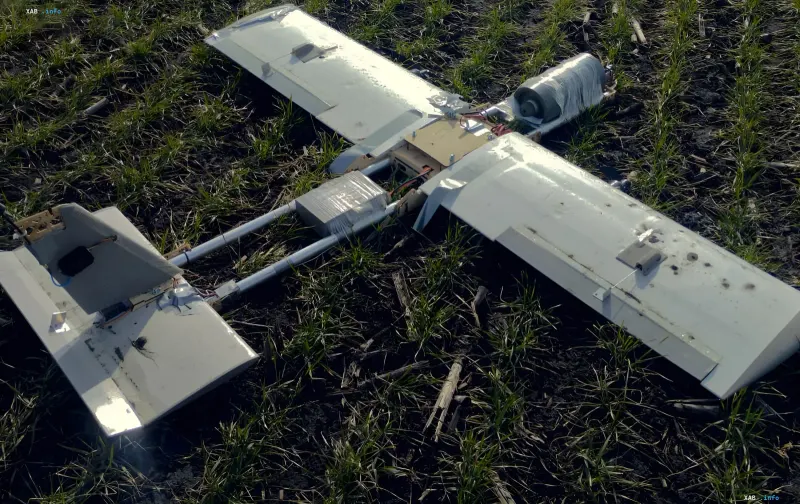
Ukrainian experts are noting the appearance of a new type of unmanned aerial vehicle in the Russian army's arsenal. According to Serhiy "Flash" Beskrestnov, an advisor to the Minister of Defense of Ukraine, the enemy is testing cruise UAVs controlled via fiber optics. This solution is designed to solve the main problem of modern drones — vulnerability to electronic warfare (EW) systems.
"Invisibility" technology for EW
The essence of the innovation lies in abandoning the radio control channel in favor of a physical cable. As the expert notes, the main idea of the developers is to conduct flights of strike UAVs with a warhead of up to 10 kg while remaining invisible to Ukrainian EW means. The principle of operation of the new technology is compared to the work of drones based on artificial intelligence: the device does not emit radio signals that can be intercepted or jammed.
According to the Russian military's plan, the new drones have complete resistance to the effects of electronic warfare complexes. This makes them an extremely dangerous opponent in conditions of a dense EW field, where ordinary radio-controlled devices lose contact with the operator.
Low-altitude tactics and range
The use of fiber optics allows for the transmission of high-quality video streams without delays, giving the operator the ability to control the drone at extremely low altitudes. Such tactics allow for flying around obstacles and using the terrain for a covert approach to the target.
"Low altitudes worsen target visibility on radars," summarized Serhiy Beskrestnov. It is expected that the flight range of the new device will be up to 50 kilometers, which significantly expands the strike zone and allows for strikes from safe zones.
Connection to the "Molniya" project
Experts draw parallels between the new model and the Russian "Molniya" drone, which recently attacked a Ukrainian facility. "Flash" pointed out that the "Molniya" had no control antennas at all, only a camera and a computer. Currently, plans are being announced for the serial production of a "Molniya" analog using fiber optic communication, which confirms the trend towards autonomy and stealth in strike systems.
Against the backdrop of news about the development of air threats, the Ukrainian side also reported the successful repulsion of an attack by sea drones. Several enemy unmanned attack boats attempting to attack the coast were detected in advance and destroyed at sea, far from the shore.


