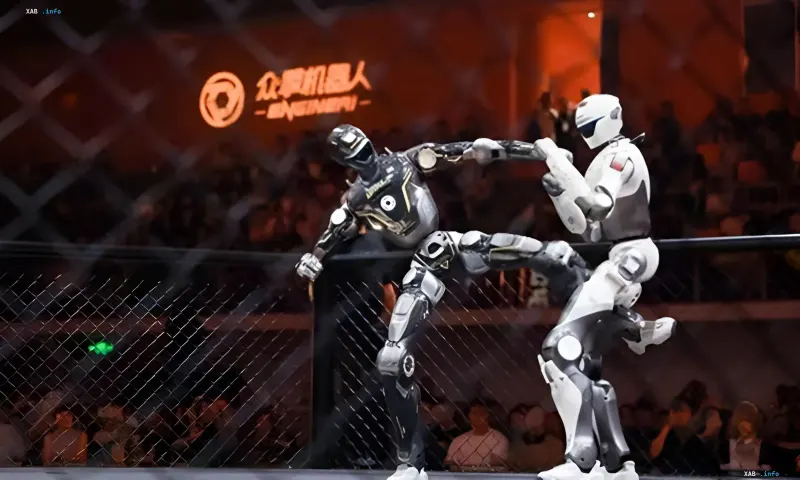
A historic event for the robotics industry took place in the Chinese city of Shenzhen. The local company EngineAI organized the world's first mixed martial arts tournament for humanoid robots, named Ultimate Robot Knock-out Legend (URKL). Full-sized machines faced off on the arena, demonstrating striking skills and evasion techniques in front of a live audience.
32 Teams and a Unified Platform
32 teams from around the world participated in the competition. To ensure fairness and standardization for all participants, the organizers used a single combat platform — the EngineAI T800 model. This allowed judges and spectators to evaluate not only the "hardware" but also the software, decision-making algorithms, and team configurations.
Dramatic Moment: A Fight Without a Head
One of the most spectacular and dramatic episodes of the tournament was the incident where one of the robots had its head torn off. Having lost the sensors installed in the helmet, the machine did not stop. Thanks to systems embedded in the torso, the robot continued to fight, delivering strikes and defending against its opponent. This incident vividly demonstrated the high structural durability and impact resistance of the machine.
Technical Capabilities of EngineAI T800
The robots participating in the tournament boast impressive specifications. The machine stands 1.73 meters tall. The manufacturer equipped them with a powerful posture control system, dynamic perception, and special shock absorbers for operation under high-intensity conditions. During the bouts, the robots performed complex maneuvers: delivering uppercuts, spinning kicks, and instantly getting up after falls.
Criteria for Victory and the Future of the Industry
The URKL tournament is not just a demonstration of brute force. Robots were evaluated based on four strict criteria: strike efficiency, body stability, ability to defend and evade, and overall structural durability. Organizers view such competitions as a powerful stimulus for industry development. A real combat environment provides the feedback necessary to accelerate the transition of intelligent robots from laboratory prototypes to commercial application.