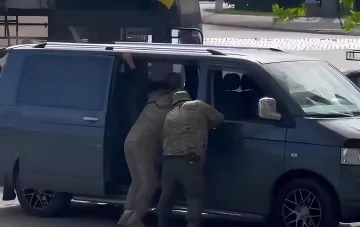
In Mykolaiv, a court imposed a fine of 17,000 hryvnias on a serviceman of the Territorial Recruitment and Social Support Center (TCC). The reason for the punishment was the lack of continuous video recording during the notification of citizens. This precedent serves as another signal of the need to strictly comply with the regulations approved by the Ministry of Defense of Ukraine.
Legal qualification and the Ombudsman's position
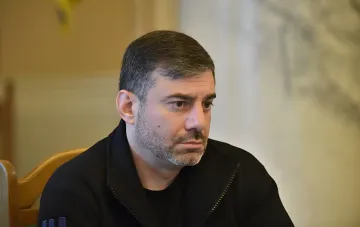
As reported by RBC-Ukraine, citing the Commissioner of the Verkhovna Rada of Ukraine for Human Rights, Dmytro Lubyntsev, the actions of the TCC employee were classified as negligence in military service under martial law. The Ombudsman called this decision an important precedent, emphasizing that the legality of law enforcement actions must be transparent.
"I once again emphasize the need to comply with the Instruction approved by the Order of the Ministry of Defense of Ukraine No. 532. It obliges TCC and Social Support Center representatives to turn on the body camera from the beginning of the notification measures and maintain continuous recording until completion," stated Dmytro Lubyntsev. According to him, interrupting the recording is permitted only in exceptional cases, such as when there is a risk of military secrets appearing in the frame or in situations requiring a short break (rest, using the restroom).
Fighting the "tangle" of versions and arbitrariness
The Ombudsman noted that his office regularly receives complaints about human rights violations during mobilization activities. The main problem faced by human rights defenders and courts is the lack of a complete picture of what is happening. Often, the parties are left only with fragmented video recordings made by the citizens themselves and mutual accusations.
"I am convinced: if every notification measure was continuously recorded on video from the first to the last minute, untangling this knot would be much easier," emphasized Lubyntsev. He pointed out that mandatory video recording is designed to protect not only citizens but also the servicemen themselves, ensuring an objective establishment of the truth.
Consequences of a lack of transparency
Dmytro Lubyntsev warned that the use of balaclavas, turning off cameras, or the complete absence of video recording undermines public trust in state institutions. "When it is impossible to determine who exactly conducted the mobilization activities, this is no longer about transparency. It creates room for arbitrariness and impunity," he stated. In the Ombudsman's opinion, if TCC representatives act legally, they have nothing to hide, and ignoring recording rules can lead to irreversible consequences for public order.
Context: Operation "Honest Draft"
This court decision comes against the backdrop of increased control over the activities of mobilization structures. At the end of July 2026, the State Bureau of Investigation (SBI), together with the General Staff, conducted large-scale searches in more than a hundred territorial recruitment centers across Ukraine. The operation, named "Honest Draft," was aimed at identifying cases of bribery for evading mobilization, as well as cases of physical violence against military personnel. The fine in Mykolaiv demonstrates that the system is beginning to punish not only for corruption but also for procedural violations that threaten citizens' rights.