
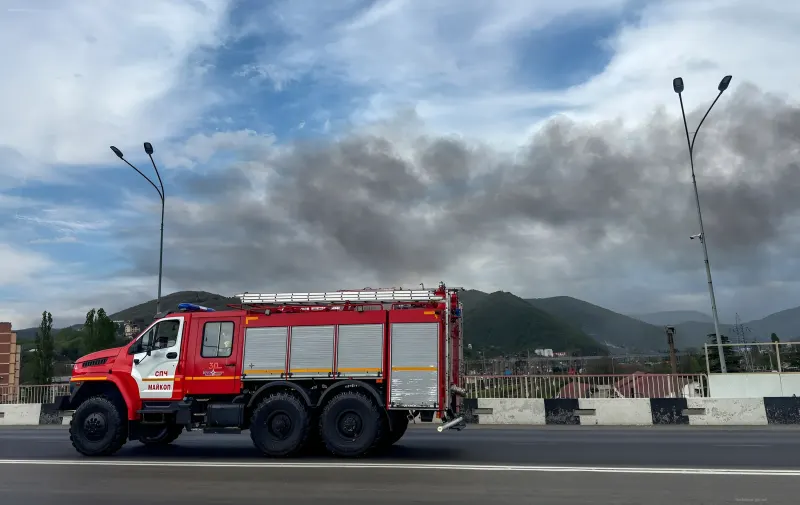
The night sky over southern Russia once again witnessed large-scale military operations by Ukrainian forces. On the night of May 27, the Armed Forces of Ukraine carried out a series of precision strikes on strategically important enemy targets, hitting both energy infrastructure and air defense command systems.
Strike on the Fuel Backbone: Tuapse Refinery
The central event of the night was the strike on the Tuapse Oil Refinery in the Krasnodar Krai. According to sources, active fires and heavy smoke have been reported on the site. A full assessment of material damage is currently impossible, but the consequences could be significant.
This enterprise is one of the key players in the southern direction. With an annual refining capacity of about 12 million tons of oil, the plant is a major fuel supplier, including for the needs of the Russian army. The attack on Tuapse continues the line of strategic strikes against the aggressor's logistics, which began earlier with attacks on refineries in Yaroslavl and Syzran.
Blinding the "Eyes" of the Air Force: Storm Shadow Strikes
Parallel to the attack on oil refining, the Ukrainian Air Force conducted an operation to neutralize reconnaissance and command systems. Using high-precision air-launched Storm Shadow missiles, the software and hardware complexes of the Russian Air Force's automated reconnaissance systems were struck.
Strikes were delivered to targets in three strategic locations:
- Voronezh Oblast;
- Taganrog (Rostov Oblast);
- Sevastopol (Temporarily occupied Autonomous Republic of Crimea).
The destruction of these nodes significantly reduces the effectiveness of Russian aviation, depriving the command of operational information about the air situation.
Strikes on Rear Areas along the Front Line
In addition to strategic targets in the deep rear, Ukrainian units struck a number of objects in the frontline zones of the Luhansk and Zaporizhzhia regions. The list of targets includes command posts of the occupiers in the areas of Tsvetnye Peski and Sorokino, as well as a material and technical supply depot in Sorokino.
Special attention was paid to the destruction of the enemy's production capacities: in the Azov area of the Zaporizhzhia region, a drone manufacturing plant was attacked. Air defense elements were also hit: the "Nebo-SV" radar station in the Kamianka area and the command and control vehicle of the "Buk-M2" complex near Kadiivka.
Domino Effect: How Strikes are Changing the Situation in Russia
The series of attacks on the oil refining industry is already yielding tangible results. According to Reuters, many of the largest refineries in central Russia have been forced to stop or significantly reduce production due to security threats. This creates a fuel shortage and hits the economy.
Moreover, security on their own territory is becoming a new reality for Russians. News of regular shelling of regions previously considered safe is beginning to cause more anxiety among the population than events on the front line. Ukraine continues to prove that war has no clear boundaries, and "long-range sanctions" in the form of missiles and drones work flawlessly.


