
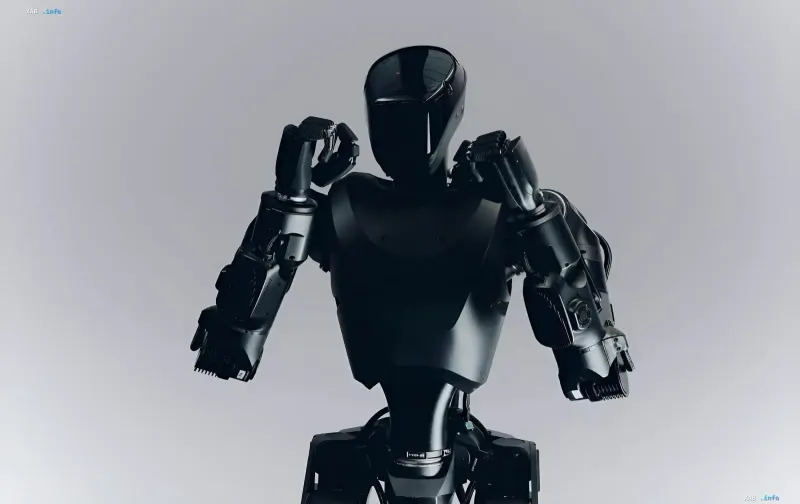
The first field trials of Phantom MK-1 humanoid robots have concluded on the front lines in Ukraine. The project, implemented by the American company Foundation with the support of the US and Ukrainian governments, has become a significant milestone in the development of military robotics. The tests demonstrated the huge potential of these androids, but also revealed serious technical limitations that currently prevent them from fully replacing live infantry.
First steps on the battlefield
The Phantom MK-1 model, unveiled in the autumn of 2025, became one of the first humanoid platforms in the world specifically designed with the specifics of combat operations in mind. The robot stands about 175 centimeters tall, and its weight ranges between 79 and 82 kilograms.
During the trials on the Ukrainian front, the androids were used primarily for logistical tasks: delivering ammunition and provisions to positions under enemy fire. Top management at Foundation assessed the results as successful: the humanoids proved their ability to take on some of the deadly transport tasks, reducing risks for personnel.
Technical limitations of the first version
Despite bold claims about the uniqueness of the new development, the first version of the device has a number of critical flaws that make mass combat deployment impossible at this stage:
- Low payload capacity: the robot can carry only up to 20 kilograms of cargo, which is insufficient for serious support of military personnel on the battlefield.
- Vulnerability to weather conditions: the MK-1 model body lacks full protection against moisture and water, which is critical for operating in trenches or in the rain.
- Weak battery: the current battery charge is not enough to conduct long-term or large-scale operations.
Developers plan to fix these errors in the next model — Phantom 2. It is promised to be handed over to Ukraine for testing by the end of 2026.
Threats and risks of implementation
In addition to purely mechanical problems, military personnel and engineers point to other serious threats associated with the use of AI robots in a conflict zone:
- Loss of technology: if a robot falls into enemy hands, it could lead to the leakage of secret data and control algorithms.
- Vulnerability to EW (Electronic Warfare): control signals for the robot can be jammed or intercepted (spoofing), depriving it of control.
- Unpredictability of AI: the neural network on the battlefield may "hallucinate," demonstrate system failures, or change its programmed behavior under real combat conditions.
Pentagon contracts and scaling plans
The success of the Ukrainian tests has already opened the doors for Foundation to secure large government contracts. The Pentagon has signed contracts worth $24 million to equip the needs of the US Army, Air Force, and Navy.
The manufacturer is currently actively preparing for a large-scale production rollout. The plan provides for the release of up to 50,000 military and industrial humanoids by the end of 2027. These machines are intended to tackle the heaviest tasks: from reconnaissance to demining territories.


