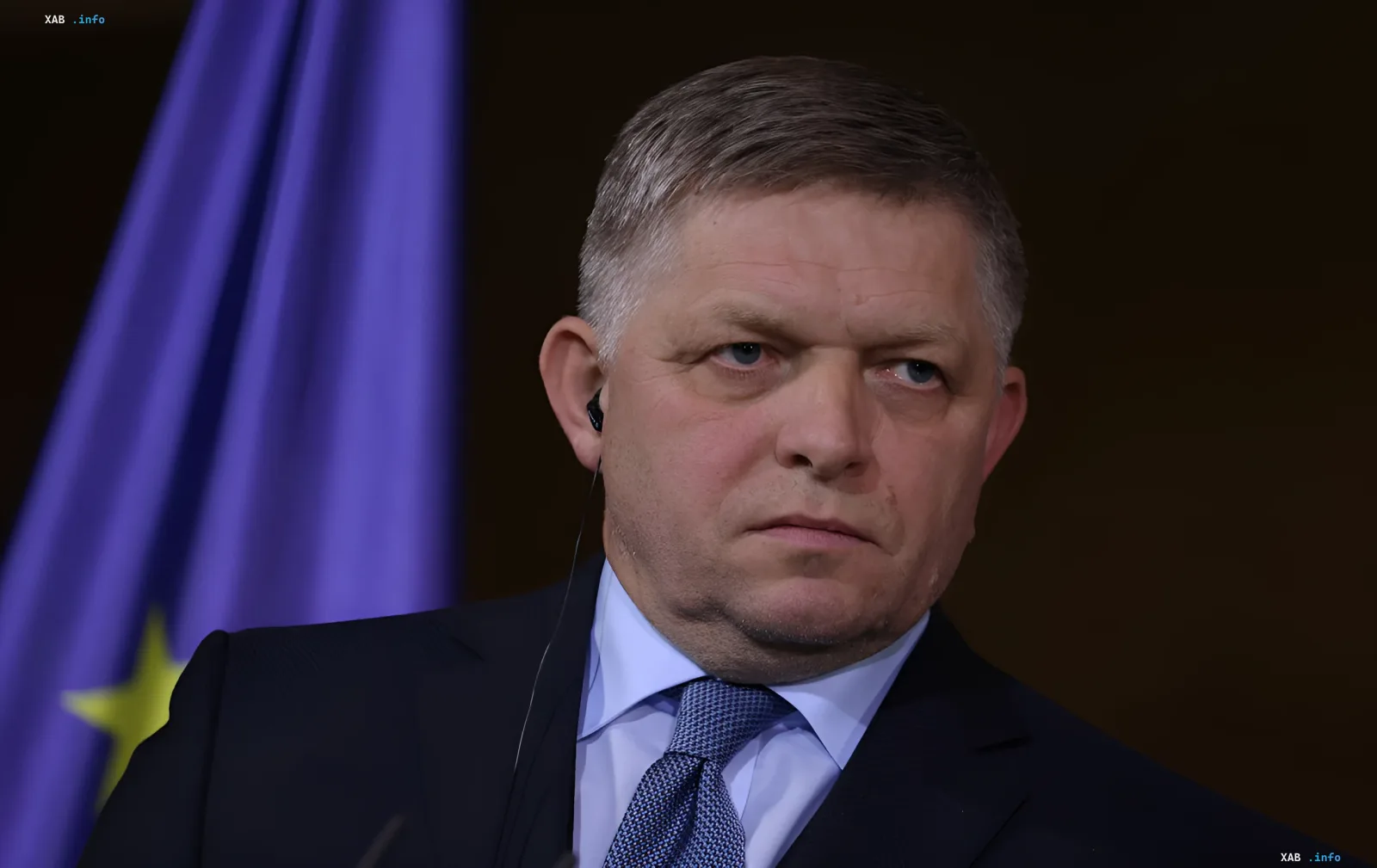
Slovak Prime Minister Robert Fico intends to present a radical initiative at the European Council meeting. The head of the Slovak government has proposed that Brussels establish a direct communication line between Ukraine and Russia to resolve the conflict.
Today, Fico will hold a series of important meetings. He will personally discuss the situation with Hungarian Prime Minister Viktor Orbán, as well as hold negotiations with Ukrainian President Volodymyr Zelenskyy. The main topic of the dialogue with Kyiv will be the process of Ukraine's accession to the European Union.
Threat of crime and strict conditions
Fico warned that the lack of prospects for Ukraine after the end of hostilities could lead to catastrophic consequences. According to him, the region risks becoming a breeding ground for organized crime.
At the same time, the Slovak Prime Minister clearly outlined his government's position regarding Kyiv's European integration:
- Slovakia will not support the reduction or exclusion of accession conditions.
- Options to bypass the regular accession procedure are excluded.
- Ukraine must fulfill all necessary conditions for membership.
Nevertheless, Fico emphasized that he has never denied Ukraine's interest in the EU and is ready to support the summit's final communique on this issue.
Criticism of EU diplomacy and the figure of Schröder
The Slovak leader criticized the current structure of European Union diplomacy. He stated that the EU is unable to play a decisive role in peace negotiations in its current composition and demanded the replacement of the EU High Representative for Foreign Affairs, Kaja Kallas.
Fico paid special attention to the candidacy of former German Chancellor Gerhard Schröder. The Prime Minister called it a major mistake for Europe to reject the proposal to use Schröder as a negotiator. In Fico's opinion, a mediator must be familiar with both sides of the conflict, and Schröder's experience working in the region makes him a suitable candidate.
Earlier, the head of EU diplomacy, Kaja Kallas, rejected the candidacy of the former chancellor, calling him a "known lobbyist for Russian companies." In Berlin and Brussels, Vladimir Putin's proposal was also publicly rejected.
Search for a negotiator: who can replace Kallas?
The discussion about Europe's participation in peace negotiations intensified after the leaders' meeting in Cyprus in May, where Volodymyr Zelenskyy called on the EU to become more actively involved in the process. The European Union is discussing the appointment of a special representative for dialogue with Moscow.
Among the potential candidates, the media mention:
- President of the European Council, António Costa.
- President of Finland, Alexander Stubb.
- Former head of the ECB, Mario Draghi.
- Former President of Finland, Sauli Niinistö.
- Former head of the European Commission, Jean-Claude Juncker.
Former German Chancellor Angela Merkel previously indicated that she does not consider herself suitable for this role. At the same time, Zelenskyy has expressed support for the idea that Europe should be represented at the negotiations by countries of the E3 format — France, Germany, and the United Kingdom.
Against the backdrop of these discussions, the main advisor to the President of the European Council, António Costa, held telephone conversations with a high-ranking Russian official from Vladimir Putin's circle. Costa appealed to the Kremlin to open a communication channel, which became the first such step by the EU since the beginning of Russia's full-scale invasion of Ukraine.


