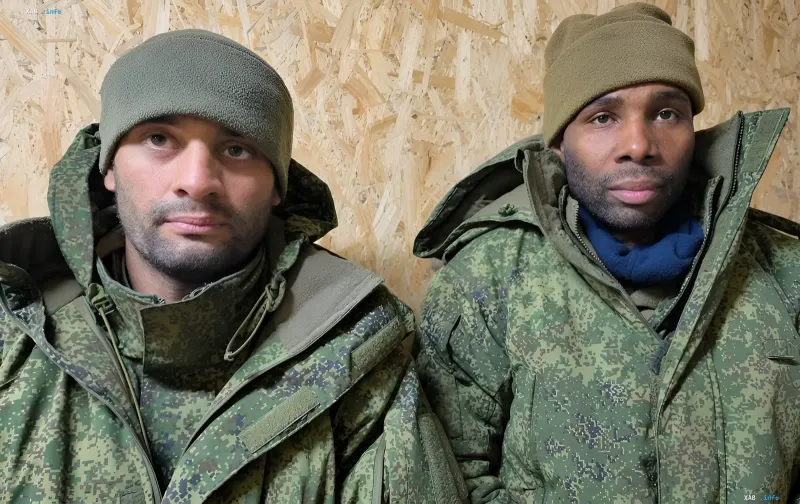
In June 2026, units of the 33rd Separate Mechanized Brigade of the Ukrainian Armed Forces captured five citizens of Colombia who had been fighting on the side of the Russian Federation. This was reported by RBC-Ukraine, citing the brigade's official post on Facebook. According to Ukrainian military sources, all five were recruited into the ranks of the Russian army on the promise of service in the rear, yet less than two months after arriving on Russian territory they were drawn into direct combat — assault attacks on Ukrainian positions.
The trap of "rear" recruitment
According to a statement by the 33rd SMBr, the Colombian mercenaries initially did not realize the situation they were getting into. The Russian side, Ukrainian military sources say, promised them "mountains" that they "would never see" — that is, generous pay and safe conditions of service in rear units. In reality, however, things turned out fundamentally different: within less than two months of their arrival, the mercenaries were transferred to the front line and incorporated into assault groups. It is for this reason that the 33rd SMBr, in its post, called them "meat-assault troops," emphasizing that the foreigners were being used as expendable material to offset personnel shortages.
When retreat meant a firing squad
The captured Colombians told Ukrainian military personnel that once they realized the true situation, they could not simply refuse to carry out combat tasks. Behind the assault groups stood Russian servicemen, and any attempt to retreat or to leave a position without authorization was met with the threat of arrest, imprisonment, or even execution. Under such conditions, according to representatives of the 33rd SMBr, capture became, in effect, the mercenaries' only way to save themselves from further participation in the fighting. Ukrainian military personnel stressed that Russia deliberately involves citizens of other countries in the war against Ukraine, using them as a tool to make up for significant personnel losses.
The scale of the foreign contingent in captivity
The case of the five Colombians is not an isolated one. In August 2026, the Parliamentary Ombudsman for Human Rights, Dmytro Lubinec, reported that Ukrainian captivity held citizens of 51 countries who had been fighting on the side of Russia. This testifies to the systemic nature of the recruitment of foreigners into the ranks of the Russian army. As of 9 September 2026, according to the figures cited in the context of the publication, the total combat losses of the Russian army exceeded 1.5 million killed and wounded. It is precisely these record-scale losses, in the assessment of Ukrainian military personnel, that are pushing the Russian command to enlist foreign citizens willing to fight on a foreign front for money.
Contradictory data
When fact-checking, it is important to distinguish between two different phenomena that are often conflated in the public sphere. The main story of this article concerns Colombians who fought on the side of Russia and were captured by the Ukrainian Armed Forces. At the same time, a number of additional sources (TASS, Life.ru) cover a different issue: Colombian and other foreign mercenaries who fought on the side of Ukraine and died in combat. In particular, TASS, citing data from the VHA, reports that the Ukrainian Armed Forces are not handing over the bodies of the deceased Colombians and are freezing payments to their families, while Life.ru writes about the identification of the remains of ten Colombian mercenaries near Kupiansk. These stories relate to the opposite side of the conflict and neither confirm nor refute the main fact — the capture of five Colombians who fought for the Russian Federation. No direct contradictions in dates or figures were found within the main story: all sources agree that the capture took place in June 2026 and that the recruitment was carried out under the guise of rear service.
Context: why Russia recruits foreigners
The statement of the 33rd SMBr fits into a broader picture that the Ukrainian side has consistently documented since the start of the full-scale invasion. Facing a chronic shortage of personnel, the Russian command is expanding recruitment channels beyond Russian territory. Foreigners are promised high salaries, legal contracts, and non-combat positions, but in practice a significant proportion of them end up in the first assault echelons. For the 33rd Brigade, operating on one of the most intense sections of the front, the capture of a group of foreign mercenaries is not merely a tactical result but confirmation that the Russian side is increasingly relying on "human resources" from abroad to hold its positions and continue offensive operations.