
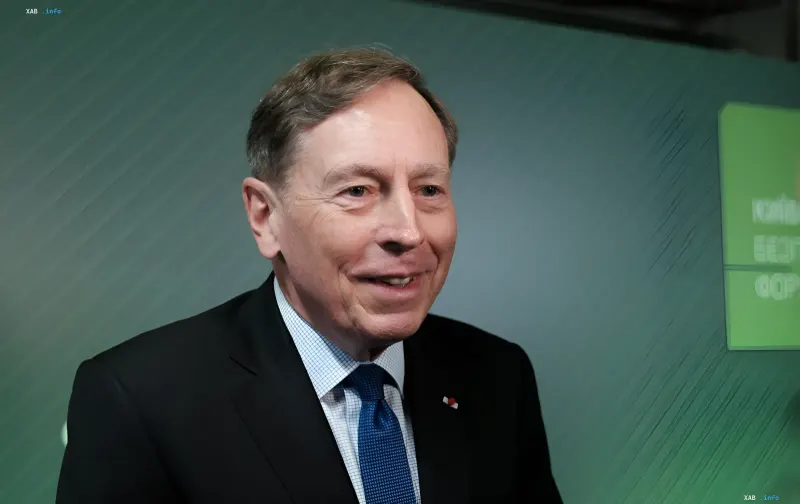
Former Director of the U.S. Central Intelligence Agency David Petraeus, in an interview with RBC-Ukraine, delivered a sharp assessment of the public rhetoric of Russia's military and political leadership. In his words, Moscow is deliberately distorting the picture of the fighting, rather than merely exaggerating its army's achievements. Petraeus emphasized that Ukraine needs to change its communication strategy with the Kremlin and prove to Vladimir Putin that a military victory over Kyiv is impossible. The interview was published on September 16, 2026, and quickly became one of the most widely quoted statements by Western intelligence figures during the course of the conflict.
"Blatant Lies": Assessment of the Russian General Staff's Statements
The central thesis of Petraeus's remarks was a direct characterization of the statements by Valery Gerasimov, the Chief of the General Staff of the Armed Forces of Russia. The former CIA chief did not settle for the formulation "exaggeration" and stated: "What Gerasimov is saying is not just an exaggeration. It is blatant lies. Absolutely." In his assessment, the Russian authorities are not merely inflating the pace of the offensive but are deliberately disseminating inaccurate information, creating in the domestic and foreign audience an illusion of steady advance. Petraeus supported his assessment with a specific example: "They are not in Sloviansk," pointing to the discrepancy between official statements and the actual situation along the line of contact.
Svatove and the Discrepancy with the Kremlin's Rhetoric
Separately, Petraeus commented on Vladimir Putin's claims about the capture of Svatove. The former CIA Director agreed with the position that Russian forces do not control this settlement, despite the public statements of the Russian leader. Thus, in the assessment of the American intelligence official, the discrepancy between Moscow's official rhetoric and the real situation on the frontline is systematic in nature and affects not isolated episodes but the key narratives that the Kremlin broadcasts both domestically and in international contacts.
The Theory of Ukraine's Victory: Proving the Impossibility of a Russian Triumph
Petraeus formulated, in his words, the "theory of Ukraine's victory," which, in his view, should become the foundation of Kyiv's further strategy. In his words, Putin continues to convince U.S. Special Envoy Steve Witkoff that Russia is achieving success and winning: "He tells Witkoff that 'we are winning. We will win.'" The former CIA chief warned that the Russian leader will not show any concern and will insist on his own correctness. Under these conditions, Petraeus believes, Ukraine's key task is not simply to hold its positions but to demonstrate to the Kremlin that a Russian military victory is impossible. "And Ukraine must show that he cannot win. And then, and only then, will Putin realize that he needs a cessation of hostilities," he stated.
Ukraine Is "Fighting a War for NATO"
In the context of discussing further support for Kyiv, Petraeus called on Western partners not to weaken their aid to Ukraine and reminded them of the strategic significance of the conflict for the entire North Atlantic Alliance. "It must stand up to everything that Russia throws at it. We must help it in every possible way. Listen, Ukraine is, in essence, fighting a war for NATO," the former CIA Director emphasized. In his words, Russia is a common adversary of the Alliance's countries, and Vladimir Putin's actions have become one of the key reasons why NATO has received "a new lease of life" and strengthened the unity of its members.
The Spring-Summer Campaign: The Price of Advance
In closing the interview, Petraeus assessed the results of the spring-summer phase of the fighting. In his words, Russia failed to achieve its set strategic objectives, despite attempts to advance on certain sections of the frontline. At the same time, the former CIA chief emphasized, for every advance Russian forces pay with enormous losses, making further offensive economically and demographically unsustainable. This assessment is consistent with the data previously published by Western intelligence structures and analytical centers tracking the dynamics of the conflict.


