In November 2026, a new player emerged in the advanced AI market, following a wave of staff shifts triggered by the merger of xAI and SpaceX earlier this February. Three former co-founders of Elon Musk's company — Guodong Zhang, Zihang Dai, and Manuel Kroiss — announced the creation of the startup Epochal, which aims to train neural networks to predict future events. Not only have these three left the company, but a number of other specialists have also departed, with former staff from xAI, OpenAI, Anthropic, and Google DeepMind joining the Epochal team, immediately positioning the project among the elite ranks of ambitious research labs.
From xAI to Epochal: The Post-Merger Split
The merger of xAI with SpaceX in February 2026 was a watershed moment for the team around which a whole ecosystem of new companies had formed. The departure of Zhang, Dai, and Kroiss is not an isolated incident: previously, xAI co-founder Igor Babuschkin, along with a group of former xAI and Tesla employees, launched the startup River AI, focused on personalized AI, while former employees Yucheng He and Erik Zelikman joined in creating the research lab AI Humans&. Thus, Epochal is part of a broader wave of entrepreneurship sparked by the reorganization of xAI.
The "Time Portal": How AI Learns from the Past
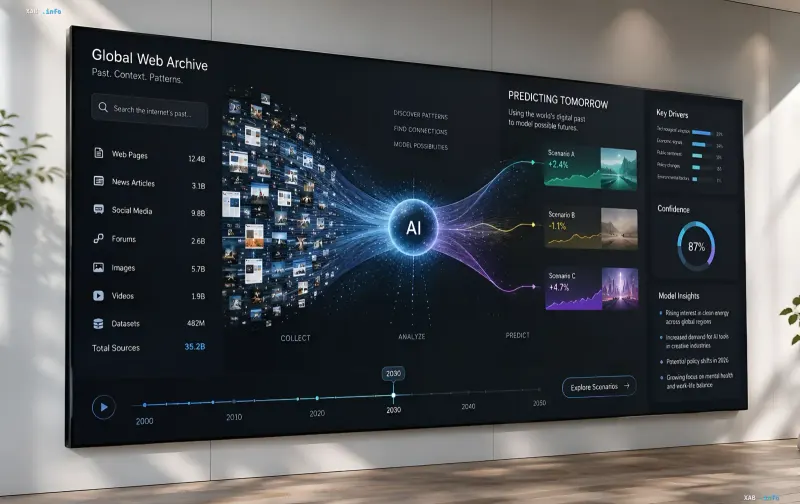
Epochal's key product is a tool the company calls a "time portal." It allows AI agents to browse archived versions of the internet as they existed on specific dates and perform precise search queries "for a specific moment hidden in time." The developers intend for the system to simulate the past and teach the model to forecast the future based exclusively on data available before events occurred. This fundamentally distinguishes Epochal from narrower projects focused on individual scenarios or behavioral modeling.
$100 Million and "Superhuman Forecasting" Ambitions
According to sources familiar with the situation, Guodong Zhang is personally investing $100 million into the project, while an Epochal representative declined to comment on funding matters. The company defines its mission as creating an advanced AI model for decision-support, believing that "superhuman forecasting" could transform almost every industry. This approach shifts Epochal from a niche tool to a potential infrastructure provider of predictive models for business and the public sector.
What This Means for the Industry
The emergence of Epochal intensifies competition in a segment where large labs have been working on predictive models for decades, but without the focus on archival "reconstruction of the past." If the "time portal" approach proves scalable, it could become a new standard for AI training on historical data. For the market, this means both an influx of capital and a redistribution of talent that left xAI after the SpaceX merger. The coming months will show whether Epochal can turn the concept into a working model comparable in impact to the generative systems that defined the last AI development cycle.