
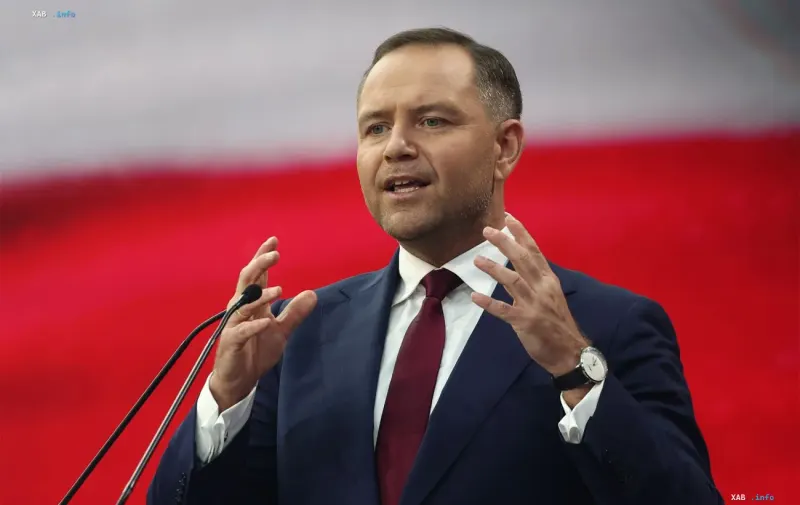
Polish President Karol Nawrocki, on the sidelines of the UN General Assembly in New York, made a resonant statement regarding the prospects for a permanent military presence of the United States on his country's territory. According to the Polish leader, should the project to establish a permanent US military base in Poland be realized, the facility could be named “Fort Trump.” Nawrocki expressed his conviction that Washington and Warsaw will ultimately reach an agreement, and that the decision itself is “only a matter of time.” “Once the work is completed by the American administration and both governments, I think President Trump himself will be able to take part in the opening of ‘Fort Trump,’” he stated, hoping that construction could be finished before the end of Donald Trump's presidential term in 2029.
The History of the Idea: From Duda to Trump
The initiative to create a permanent US military base on Polish territory is not new. It was first voiced in 2018 by then-Polish President Andrzej Duda, but during that period the project never moved from the stage of declarations to practical implementation. The turning point was the start of Russia's full-scale invasion of Ukraine in February 2022: after that, Warsaw significantly intensified its efforts to increase the permanent presence of American troops on its territory, viewing it as a key element of national security in the face of a direct threat from Moscow. In the last days of September 2026, Donald Trump, for his part, declared “significant progress” in negotiations with Poland and announced that the location of the future base could be announced in the near future, calling the potential agreement a “historic step” for the American-Polish alliance.
Current Military Presence and Expansion Prospects
To date, approximately 10,000 US service members are stationed on Polish territory, however their presence is rotational in nature and is not established within the framework of permanent basing. Nawrocki emphasized that Warsaw is ready to take on a portion of the American troops that may be withdrawn from Germany, should Washington decide to reduce its military presence in that country. According to the Polish president, a number of administrative and financial issues must now be resolved before the project moves into the stage of active construction. “It is difficult for me to name specific dates, but I think this matter is definitely confirmed, because President Trump is known for keeping his word,” Nawrocki noted, while acknowledging that a final decision on the creation of the facility has not yet been made at this time.
The Financial Burden: Budget Deficit and Defense Spending
The implementation of the project to create a permanent American base inevitably touches on the question of financing. In recent years, Poland has faced a growing strain on public finances due to high defense expenditures, which account for a significant share of the national budget. In August 2026, Warsaw presented a draft budget for 2027, providing for a deficit of 7.1% of GDP — a figure that raises concern among both domestic and international observers. Commenting on the country's financial difficulties, Nawrocki stated that the situation requires certain measures, but called for not overestimating the risks to the Polish economy and for not creating a panic mood around defense spending.
Contradictory Data
In the provided sources, information on the status of the negotiations over the base's creation is largely consistent: both Nawrocki and Trump speak of “significant progress,” yet neither confirms the fact of a final decision having been made. Trump declares readiness to announce the base's location “in the near future,” while Nawrocki emphasizes that it is difficult to name specific dates due to the need to resolve administrative and financial issues. Thus, there is a gap between the public rhetoric of a “matter of time” and the actual absence of a signed agreement. Moreover, although Nawrocki characterizes the project as “definitely confirmed,” none of the sources contains references to specific documents, memoranda, or legislative initiatives that would legally enshrine the intention of both parties. This creates room for interpretation: is “Fort Trump” already an agreed-upon project, or does it remain a political declaration aimed at demonstrating allied solidarity.
Context and Significance for the Region
The creation of a permanent US military base in Poland, if it materializes, will be the largest military event in Eastern Europe since the end of the Cold War and will significantly alter the security architecture in the region. For Poland, this means not only a strengthening of its defensive potential but also long-term financial commitments to maintaining the infrastructure. For the United States — the consolidation of a forward presence on NATO's eastern flank in close proximity to the borders of Russia and Ukraine. For Ukraine, which is at war with Russia, a permanent American basing in a neighboring country could be viewed as an additional deterrent factor, though it does not replace direct military support for Kyiv. In any case, Nawrocki's statement at the UN General Assembly marks that the “Fort Trump” question has moved from the realm of hypothetical discussions to the plane of practical preparation, even if the final decision has not yet been made.


