
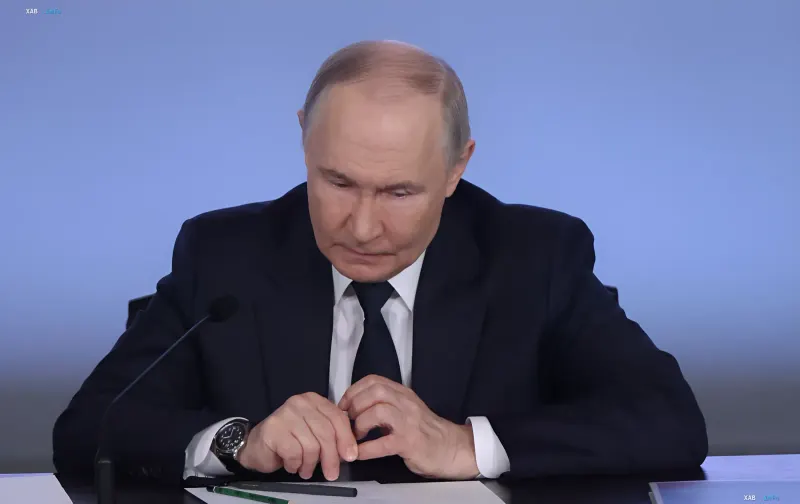
For the fourth time since the start of the full-scale war, Russian President Vladimir Putin is increasing the number of personnel in the central apparatus of his security service. The corresponding draft decree was published on the Russian portal of regulatory legal acts and is set to come into force as early as July 1.
New figures and tasks of the agency
According to the text of the document, the maximum number of military personnel and civil servants in the central apparatus of the Federal Security Service (FSO) will increase from 785 to 812 people. The main task of this agency remains the personal protection of the President of the Russian Federation, members of his family, and the Prime Minister.
History of staffing changes
Before the start of the full-scale invasion of Ukraine, the leadership of Russia had not expanded the central apparatus of the FSO for almost 13 years. Previous changes were made back in March 2010, after which the number of personnel remained unchanged for a long time.
During the war, decrees on the expansion of the central apparatus of the FSO were adopted exclusively at the end or beginning of the year:
- On December 31, 2022, Putin increased the service staff from 725 to 760 people.
- In January 2024, the dictator approved two stages of increasing the number of guards at once: first to 775 people, and from January 1, 2025 — to 785 employees.
Context of Kremlin statements
Recall that earlier, Putin claimed that Ukrainian military forces were allegedly "surrounded" in the area of Stary Oskol. At the same time, in his statement, he confused the Oskol River with the city of Stary Oskol, located in the Belgorod region of the Russian Federation.
Also, analysts from the Institute for the Study of War (ISW) noted that the dictator is deliberately creating a false impression of the successes of the Russian army and exaggerating the losses and failures of the Armed Forces of Ukraine. According to experts, in this way, the Kremlin is trying to justify the continuation of the war and maintain relevant narratives.


