
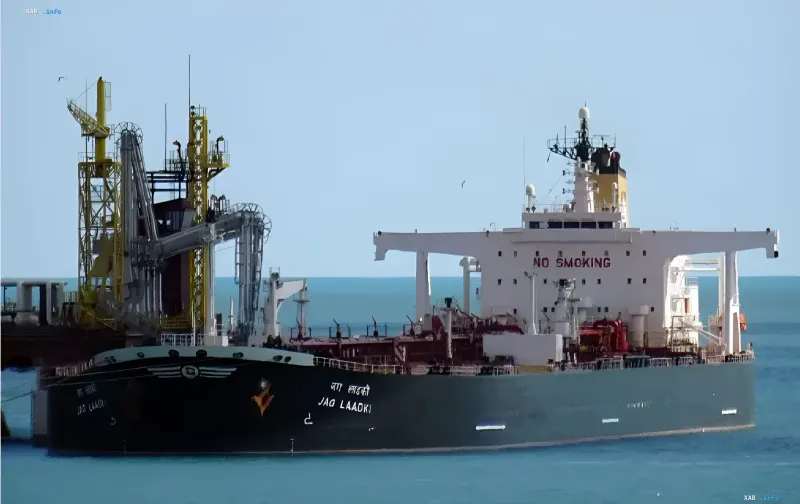
A new chapter in the fight against Russia's "shadow fleet" is unfolding in the Mediterranean. The French Navy carried out a decisive operation, detaining the oil tanker Deliver. The vessel was stopped while transiting off the coast of Sicily. French President Emmanuel Macron confirmed the detention, stating that the tanker was moving in gross violation of international maritime law.
Systematic hunt for violators
The operation in the Mediterranean was not an isolated incident. It occurred just a few days after similar actions by the British Navy. Macron emphasized that such steps demonstrate a unified position among European states: Paris and its allies intend to completely block illegal channels enriching the Kremlin.
"We will not allow the shadow fleet to circumvent sanctions and finance Russian military efforts. Europe is resolute," the French leader declared. According to him, the coalition's goal is to increase the cost of the war for Russia and create conditions for a lasting peace in Ukraine.
Profile of the violating vessel
The tanker Deliver, sailing under the flag of Cameroon, is a typical representative of vessels involved in exporting Russian petroleum products to China and India. According to data from the Main Directorate of Intelligence of the Ministry of Defense of Ukraine, the ship's crew regularly turns off the Automatic Identification System (AIS) to hide their routes from international control.
Due to irregular shipping practices and physical wear, the environmental organization Greenpeace classified Deliver as part of the "shadow fleet," posing a threat to the environment. The international coalition began blocking the vessel's operations at the beginning of 2025. Initially, sanctions were introduced by the EU and Switzerland, and later joined by the UK, Australia, Canada, and New Zealand.
Chronology of restrictions
Ukraine included the tanker in its sanctions lists as early as December 2025. In February 2026, Kyiv introduced personal restrictions against the ship's captains — Chinese citizens Rong Bo and Zhen Enjian. Despite this pressure, Deliver continued to call at the ports of Novorossiysk and Ust-Luga, ensuring logistics between Russia and terminals in Turkey, Egypt, and India.
Vladyslav Vlasuk, the President of Ukraine's Commissioner for Sanctions Policy, noted that Deliver has become the fourth vessel of Russia's "shadow fleet" intercepted by France since the beginning of the year. Previously, the tankers Deyna, Grinch, and Tagor were detained. Vlasuk emphasized that Ukraine, together with partners, is working to ensure the detention is as long as possible, and in the long term, the vessel will never again be used to transport Russian oil.
Legal grounds and risks
The legal basis for such operations was established in early June, when the EU authorized stopping shadow fleet vessels by force in the Mediterranean as part of the naval operation IRINI. Military personnel from EU member states received the legal right to board suspicious vessels to conduct physical inspections.
European legislators in Germany and France have repeatedly called for strict inspections, pointing out that the aging Russian fleet poses risks not only to the environment but also to security. Deputies noted that such vessels could be used for espionage or sabotage.
Radical responses from Moscow
In response to tightened control, the Russian side is demonstrating readiness for radical measures. Senator Dmitry Rogozin proposed mining civilian vessels so that in the event of an attempted arrest by foreign states, they could be blown up directly at sea. The goal of such tactics is to create a threat of a large-scale ecological catastrophe off the coasts of Europe, which should deter Western fleets from detaining ships.


