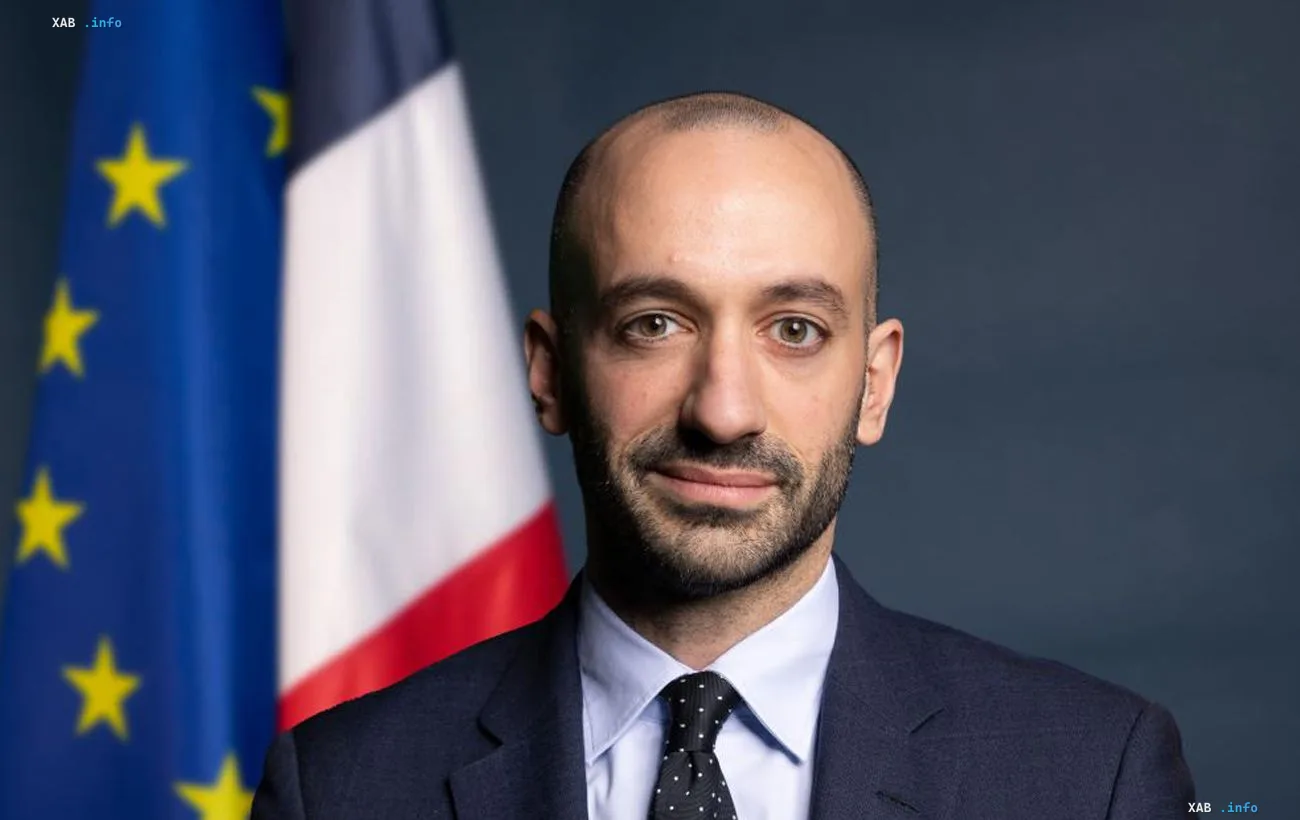
Throughout the conflict, France has remained one of Ukraine's key European partners, combining military, economic, and humanitarian support. The political context adds particular urgency to this dialogue: in 2027, Emmanuel Macron will complete his second presidential term, and right-wing radical forces may take over the Élysée Palace. It is against this backdrop that France's Minister-Delegate for European Affairs, Benjamin Adda, a close member of the president's inner circle, gave an in-depth interview to RBC-Ukraine during his visit to the Chernihiv region, where he personally inspected reconstructed facilities, underground shelters, and medical institutions.
Chernihiv Region: French Sponsorship in Numbers
Paris has taken on the sponsorship of reconstructing a specific Ukrainian region — the Chernihiv region. According to Adda, France has funded projects in the region worth approximately 18 million euros, primarily in the healthcare sector: rehabilitation of the wounded, ensuring child protection in underground facilities at a children's hospital, where 730 square meters of shelters were set up, equipped with surgical equipment, beds, ventilation systems, and electrical equipment. In the energy sector, approximately 35 generators were sent to the region over the past two years, enabling the continued operation of critical facilities amid constant attacks. "Our support for Ukraine encompasses many areas: military, economic. But it is very important that we also have an impact on the daily lives of Ukrainian citizens, who continue to live very bravely despite the aggression and bombings," Adda emphasized.
Humanitarian Aid as an Element of Long-Term Strategy
The Minister-Delegate emphasizes that French engagement is not limited to one-off deliveries. In addition to healthcare and energy, Paris's portfolio includes projects in education (setting up bunkers and underground classrooms to ensure the continuity of the educational process) and the restoration of historical monuments. Adda stated outright that Ukraine can count on long-term support and involvement from France, and that the effectiveness of projects should be assessed not by diplomats but by the local population and officials, who, according to him, express gratitude for the initiatives implemented.
Hungarian Veto and Ukraine's Path to the European Union
A significant portion of the conversation with Adda went beyond regional projects and addressed systemic issues of Ukraine's European integration. In his capacity as Minister-Delegate for European Affairs, he is responsible for all of Paris's European policy, including France's position on overcoming obstacles on Kyiv's path to the EU. In particular, the strategy for countering the Hungarian veto, which blocks a number of key decisions on enlargement and support for Ukraine, was discussed. Adda also touched on the issue of countering Russian disinformation in the European information space, identifying it as one of the priorities of French diplomacy in the current cycle.
The Risk of a Change of Power in France: What It Means for Kyiv
One of the most sensitive issues in the interview was the prospect of the 2027 presidential elections in France. Macron, who completed his first term in 2022, will not be able to run for a third term, and analysts point to the growing chances of right-wing radical forces, primarily Marine Le Pen's "National Rally." Adda, as a member of the current team, did not make direct predictions, however, in the context of the interview, the idea emerged that European support for Ukraine should be institutionalized so that it does not depend on the change of specific politicians. The question of whether the rise of right-wing populists in France poses real risks to the scale and nature of support for Kyiv remains open and will be determined by the outcome of the 2027 French elections.
Europe's "Strategic Awakening"
The concluding part of the interview is devoted to a broader topic — the new architecture of European security. Adda uses the expression "strategic awakening" to describe the process in which European countries are forced to take responsibility for their own security into their own hands, reducing dependence on the transatlantic umbrella. In this context, support for Ukraine is seen not only as a humanitarian or geopolitical gesture but as a structural element in shaping a new European defense order, in which Paris seeks to play a coordinating role alongside Berlin and other key capitals.