
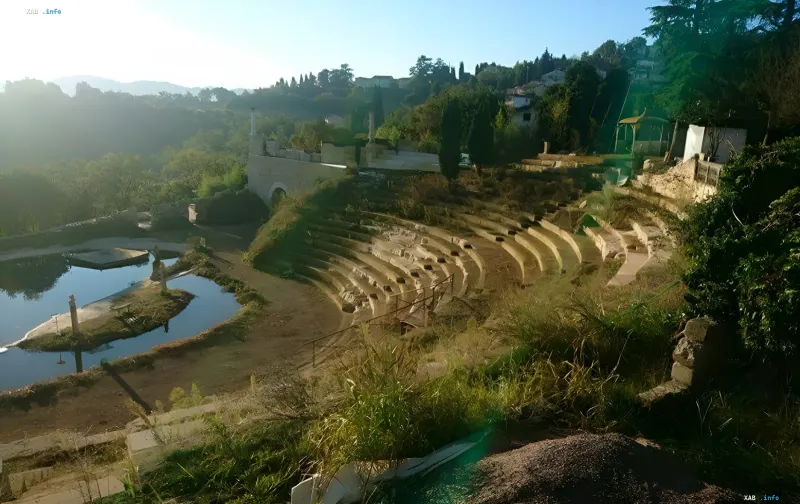
In Italy, one of the most high-profile legal cases in recent years regarding architectural fraud has concluded. Franco Malosso, a 69-year-old from Vicenza known in certain circles as "von Rosenfranz," has been definitively sentenced to prison. For nearly two decades, the man deceived tourists and authorities by passing off a modern structure he built himself as an ancient Roman amphitheater.
The Story of the Deception: From Julius Caesar to Juliet
Since 2005, Franco Malosso convinced visitors that a unique archaeological find—the Berico Maritime Amphitheatre—had been discovered on the hills of Arcuniano. According to him, the structure was supposedly unearthed following a landslide. Malosso did not shy away from details: he claimed the amphitheater dated back to 393 AD and was one of the largest in the world.
To add credibility to the legend, the fraudster claimed that Julius Caesar, Cleopatra, and even the fictional Juliet Capulet had visited the walls of this "monument." Tourists who believed these stories paid 40 euros for tours. Moreover, thanks to Malosso's persistence, the site was even included in the regional tourist guide.
How the 'Antiquity' Was Created
The truth about the nature of the structure came to light in 2016 following a complaint by local authorities. Professional archaeologists and the Italian military police were brought in to investigate. The inquiry revealed that no ancient monument existed at the site. Instead of historical ruins, experts found a semi-circular complex built from modern materials.
To create the effect of age, Malosso used artificially aged stone blocks, cement columns, and plaster sculptures. He also constructed an artificial pond to enhance the impression of a "maritime" amphitheater. The fraudster had no permits for construction activities.
Court Verdict and Consequences
The trial against Malosso dragged on for nearly 10 years. As early as 2019, the court found him guilty of illegal construction, forgery of works of art, and erecting structures without permits. At that time, a sentence was handed down: 2 years and 4 months in prison, a fine of 3,000 euros, and an obligation to demolish the unauthorized complex and restore the hill to its original state.
The defendant's lawyers attempted to overturn the verdict by filing numerous appeals. However, the case was finally closed by the court in July 2026, which rejected the last request to replace the prison sentence with community service. Now, "von Rosenfranz" must serve his sentence in a correctional facility.