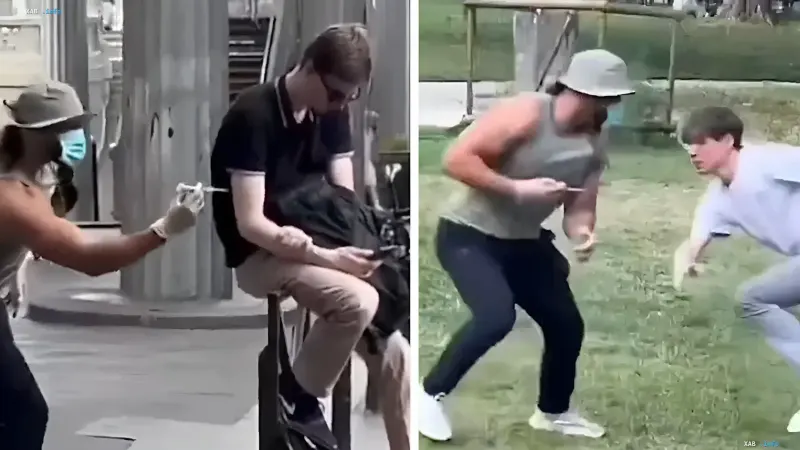
In France, a 27-year-old TikToker known by the pseudonym Amin Mojito (real name Ilan M.) has been sentenced for scaring pedestrians on the streets of Paris by simulating syringe injections. The court found him guilty of "violence with the use of an object as a weapon that did not result in permanent disability" and sentenced him to 12 months in prison: six months to be served behind bars and six months suspended. Videos of such "injections" had previously circulated on social media, sparking widespread public outrage.
How the "syringe" prank was staged
According to the prosecution, the incidents occurred during a time of heightened public fear regarding syringe-based attacks. The blogger approached random passersby and pretended to inject them. As the prosecution confirmed, no one was actually pricked: Ilan M. did not remove the protective cap from the syringe. Nevertheless, the prosecution argued that, regardless of intent, these actions created an atmosphere of fear and provoked a sense of threat from strangers.
Charges and defense
In court, Ilan M. attempted to justify his actions, stating he did not intend to harm anyone and was simply repeating pranks he had seen in videos from other countries, including Spain and Portugal. "I had the terrible idea of repeating such jokes, imitating what I saw on the internet... I didn't think it could harm people. That was my mistake—I wasn't thinking about others, I was only thinking about myself," he stated. The defense requested leniency from the court, while the prosecutor pointed out that these "jokes" caused severe psychological trauma to several victims, some of whom sought medical checkups. One victim described the feeling of potentially having been infected as a "nightmare."
Court ruling
The judge concluded that the blogger's actions contributed to an atmosphere of fear in society and sentenced him to 12 months in prison with a six-month suspended sentence. Notably, as noted in the case files, the number of official police complaints regarding his actions was low. However, the court deemed that such "entertaining" actions, which threaten people's sense of safety, cannot be viewed merely as social media content.
Context: why the case caused a resonance
The case received significant attention against the backdrop of heightened public fear of syringe attacks, where even a simulated injection is perceived as a real threat to health. The Amin Mojito case became a demonstrative example of how pranks, performed to gain attention and followers, can lead to criminal prosecution and real psychological trauma for those around.