
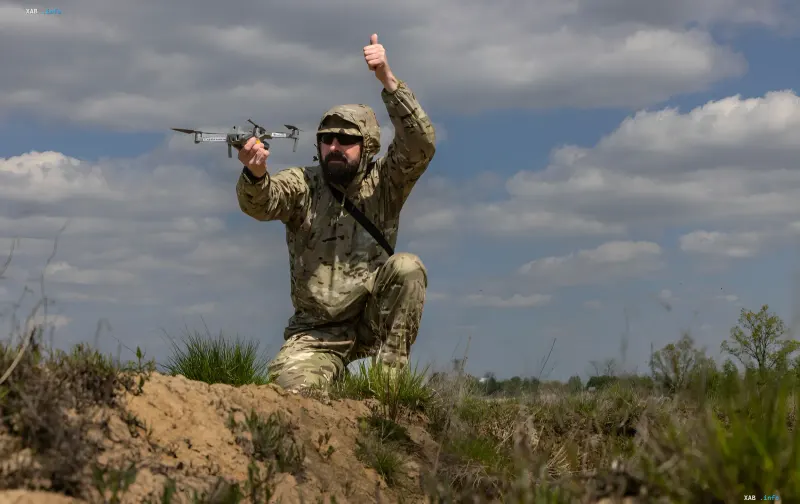
In the conditions of modern warfare, the training of unmanned aerial vehicle (UAV) operators goes beyond simply mastering piloting skills. The key factor becomes the speed of learning and the efficiency of resource utilization. This is where modern simulators come to the forefront, allowing for the scaling of training without unnecessary expenditure of ammunition and equipment.
Technology Instead of Real Losses
As reported by RBC-Ukraine in the article "From Simulator to Frontline: How Drone Operators Are Trained in Ukraine and the Role of Manufacturers," the use of simulators is becoming the standard for personnel training. This solution allows for the reduction of logistical costs and avoids risks associated with the concentration of personnel on training grounds.
Special attention is paid to specialized simulators developed by the company L7 Simulators. Their product is focused on training crews for interceptor drones. The main feature of the solution is the emphasis on team interaction between the pilot and the gunner. Experts emphasize that it is precisely the coordinated work of the crew that often determines the success of completing a combat mission.
Realism and Methodology
Developers strive to reproduce scenarios as accurately as possible, which soldiers encounter on the battlefield. This is necessary to increase not only technical training but also tactical and psychological readiness. To this end, a proprietary methodological library of exercises and scenarios is being formed, created with the participation of military consultants with real combat experience.
"We rely on the remarks of military personnel with current combat experience. This allows us to model conditions that are as close as possible to the real combat environment, including typical challenges and scenarios that operators face on the front line," note the creators of the simulators.
Advantages of Virtual Training
Modern simulators have a number of key advantages over traditional field exercises:
- Zero cost of error: Operators can practice scenarios repeatedly until confident skills and action automation are formed.
- Complex scenarios: Software allows for the creation of combat situations that are extremely difficult or economically unfeasible to reproduce in reality.
- High immersion: Controlling a drone on a high-quality simulator is practically indistinguishable from working with a real aircraft.
Thus, simulators become an important intermediate link between theoretical training and flights at the range. Although one can learn the basics of drone control in a few days, future operators must undergo much longer and more thorough training to perform combat missions, where simulators play a decisive role.


