
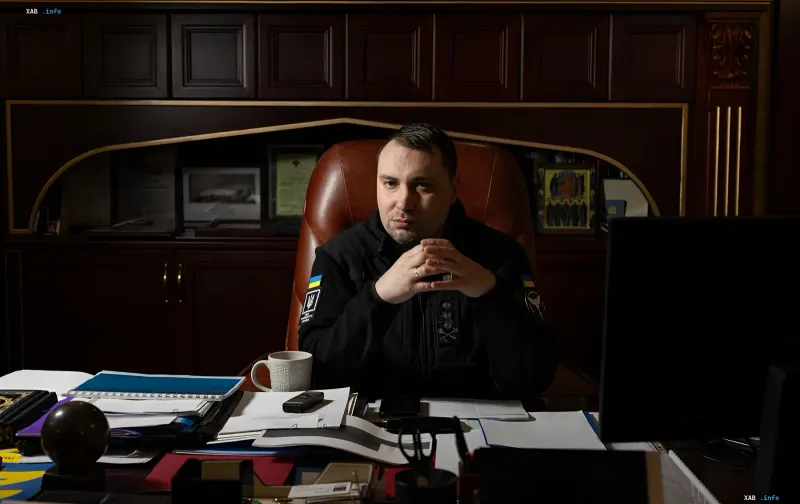
Exactly six months ago, a significant event occurred in Ukrainian politics, which many perceived as a sensation: Kyrylo Budanov, previously heading the Main Directorate of Intelligence (GUR), unexpectedly replaced Andriy Yermak as the head of the Office of the President (OP). Over the past six months, there has been no radical personnel purge at Bankova; however, the architecture of power and the Office's place in the country's system of coordinates have undergone fundamental changes.
As data from RBC-Ukraine sources shows, the era of Yermak, referred to in the corridors of power as the time of the 'vice president,' has completely ended. The former head of the OP, whose influence relied on intrigue and total control, has 'dropped off the radar' and is occupied with resolving his own legal issues. Meanwhile, his successor, Kyrylo Budanov, has transformed the Office from a universal center for all decision-making into the main operational headquarters.
The End of the Micro-management Era
The main difference between Budanov's style and his predecessor is the rejection of total control. Andriy Yermak, according to the publication's interlocutors, tried to personally oversee absolutely all spheres of the country's life: from the economy and the front to peace negotiations, the appointment of local leaders, and even football. In the informal hierarchy, his deputies de facto stood above ministers.
Under the new configuration, the situation has changed. Budanov delegates tasks and does not try to be everywhere at once. Dozens of working groups created by Yermak have ceased to exist. Ministers have gained more autonomy, and contacts between Bankova and the Verkhovna Rada, in particular with the 'Servant of the People' faction, have significantly intensified.
Military Style and Autonomy
The new head has retained a certain autonomy that he had in the intelligence service. At his workplace, he continues to wear military uniform and often appeals to his combat experience during meetings. This creates a specific atmosphere in the Office, where decisions are made faster, but the responsibility for them is higher.
Interestingly, high-ranking officials who were previously considered 'Yermak's people' turned out to be 'the president's people' in reality. In the vast majority of cases, they retained their positions, simply severing contacts with the previous 'patron.'
The Zelenskyy-Budanov Tandem: From Crisis to Working Format
The change in leadership radically changed the format of relations with Volodymyr Zelenskyy as well. If the tandem with Yermak was based on personal friendship and 24/7 communication, the interaction with Budanov has become more formalized and working, without such a deep personal component. The President himself initiated the rejection of the model where the head of the OP constantly accompanies him on business trips.
However, the 'break-in' process did not go smoothly. Budanov's high public activity and his status as a 'war hero' created a challenge for the President's team, where 100% loyalty is required. For the first time in Ukrainian history, the head of the presidential chancellery began to be perceived as a potential electoral competitor, which caused tension in the context of future elections.
In the spring, 'differences in temperaments' almost led to a break, and rumors circulated in the corridors about Budanov's summer resignation. However, an open conversation about the format of cooperation helped relieve the tension. Both had to make certain 'emotional concessions,' and at the moment, nothing threatens the position of the head of the OP.
Saving the Rada and Working with Parliament
Over time, Budanov reduced his media activity, focusing on routine processes, in particular on establishing cooperation with parliament. Sources note that to save the functionality of the Verkhovna Rada (so that it 'stays on the ventilator for at least a year'), Budanov, together with the leadership of the VR, initiated direct meetings of the President with deputies.
This step yielded concrete results: the parliament began voting more actively for draft laws necessary to fulfill obligations to the West. The format of meetings with the faction proved successful, and the next similar conversation between the President and deputies is preliminarily planned for Independence Day.


