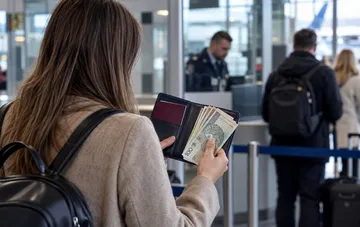
During court proceedings, the Federal Security Service (FSB) confirmed the fact of conducting so-called "filtration checks" at Moscow airports, during which personal mobile devices belonging to foreign citizens were seized and inspected. This became known from nine court rulings regarding lawsuits filed by citizens of Tajikistan and Uzbekistan who were denied entry to Russia. A study of these documents conducted by the media outlet "Ostrozhno, Novosti" revealed the systematic nature of these measures and the specific criteria used by security officials to decide on entry denials.
"Voluntary" Device Handover and Border Questioning
In court, FSB representatives described the procedure in a uniform manner: every plaintiff was directed at the border to a "filtration check," which included verbal questioning and a phone inspection. According to the security service, the foreigners handed over their devices voluntarily. However, the context itself—compulsory referral for a check prior to entry permission—indicates that refusing to hand over the device essentially meant an inability to cross the border. The court decisions record that the inspection was carried out for all plaintiffs without exception, rather than on a selective basis.
Deleted Chats and Feature Phones as Grounds for Denial
The most telling aspects were the arguments provided by the FSB to justify the denials. In one case, the service pointed to "signs of concealing correspondence by deleting it" in the WhatsApp and Telegram messengers. In another ruling, the reason for denial was that the foreigner "uses a feature phone for communication." Thus, as the analysis of court documents shows, the criteria for suspicion by border services can range from finding traces of deleted messages to the very fact of using a device without messenger capabilities.
YouTube Watch History and "Radical Ideology"
Beyond correspondence, the FSB also examined the foreigners' digital activity on the internet. Specifically, the court decisions mention an analysis of YouTube watch history and subscriptions to channels of preachers whose activities are banned in Russia. Based on this data, security officials classified the plaintiffs as "adherents of radical Islamic ideology," which became the formal basis for denying entry to the Russian Federation.
Context: From Crocus Attack to Expanded Practice
The wave of "filtration checks" at Moscow airports reportedly began in the spring of 2024 following the terrorist attack at Crocus City Hall. Since then, the practice has not only persisted but, judging by the court rulings, has become a routine procedure for foreign citizens arriving in Russia. Later, Russian citizens returning from trips abroad also reported interrogations and checks at the border, which indicates an expansion of such measures beyond foreigners.
Legal Consequences and Transparency Issues
The published court rulings demonstrate that foreigners who have been denied entry effectively have no possibility of challenging the decision outside of court proceedings. Moreover, the criteria by which the FSB decides on admission or denial remain informal: the absence of correspondence, the use of a feature phone, or a subscription to certain YouTube channels can serve as sufficient grounds. The lack of a publicly available list of "red flags" for border services creates legal uncertainty for foreign citizens planning a trip to Russia.