Political expert and strategist Oleksiy Holobutsky has expressed the opinion that Russian special services may have involved representatives of the criminal world to carry out an information campaign aimed at discrediting Ukraine's state institutions. He wrote about this on his Facebook page, with his comments cited by RBC-Ukraine. The statement came amid the publication of new materials in the high-profile «Carthage» case.
The «Mexican's» Message and the Question of Authenticity
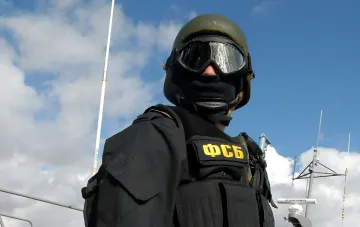
According to the analyst, the main message of the statements circulated on behalf of Russian drug lord Yegor Burkin, known as the «Mexican», boils down to a call to completely liquidate Ukraine's law enforcement, legal, judicial, and anti-corruption bodies, as well as all state power. At the same time, the expert emphasizes that the authenticity of these recordings has not been confirmed, and they could have been generated by artificial intelligence on the instructions of the FSB. Holobutsky acknowledges that the Russian trace is indeed present in many corruption schemes, as the Russian Federation allocates significant resources for the work of special services, but considers it inappropriate to unconditionally accept theses voiced on behalf of a hostile criminal representative.
«Criminal, Enemy, and Special Services Agent»
Commenting on the reaction of a part of the Ukrainian audience, the expert pointed out that it «joyfully clung to the 'expose' and instantly forgot who exactly is voicing the accusation (or on whose behalf it was voiced)». According to his phrasing, the source is simultaneously a criminal, an enemy in the critical phase of the war, and an agent of enemy special services, which, according to him, he stated himself. This argument, by the author's design, is intended to explain why statements of this kind require particularly cautious treatment.
Trend of Trust in Russian Media Figures
The political scientist also drew attention to the trend where a part of the Ukrainian audience trusts the statements of Russian media figures — citing Yury Dud, Yulia Latynina, Yevgeny Chichvarkin, and Viktor Shenderovich as examples. According to him, a similar uncritical perception is observed regarding the «Mexican's» statements, which are used to criticize state bodies during the war.
Context: The «Carthage» Case and the «Khimprom» Investigation
The expert's comment came against the backdrop of NABU and SAP releasing new audio recordings in the high-profile «Carthage» case. The investigation announced the exposure of a criminal organization that, according to its version, operated in Ukraine for years under the cover of SBU, Prosecutor General's Office, and National Police officials. According to the investigation, the scheme covered dozens of fraudulent call centers, drug trafficking, the manufacture of counterfeit currency, as well as the kidnapping and torture of people. One of the participants in the scheme, according to the investigation, is the leader of the «Khimprom» drug cartel, Yegor «Mexican» Burkin. Earlier, the head of the National Police's Drug Crime Department, Dmytro Torhalo, in an interview with RBC-Ukraine, spoke about threats from the «Mexican», the progress of the investigation into «Khimprom» and the U420 network, and criminals' attempts to disrupt the ban on the illegal substance.
Need for Verification
Concluding his publication, Holobutsky emphasized that the published materials need analysis by relevant Ukrainian structures to separate possible facts from disinformation. Thus, the expert does not deny the existence of real problems in the law enforcement system, but insists that the source and method of disseminating accusations must be taken into account when assessing their reliability.