
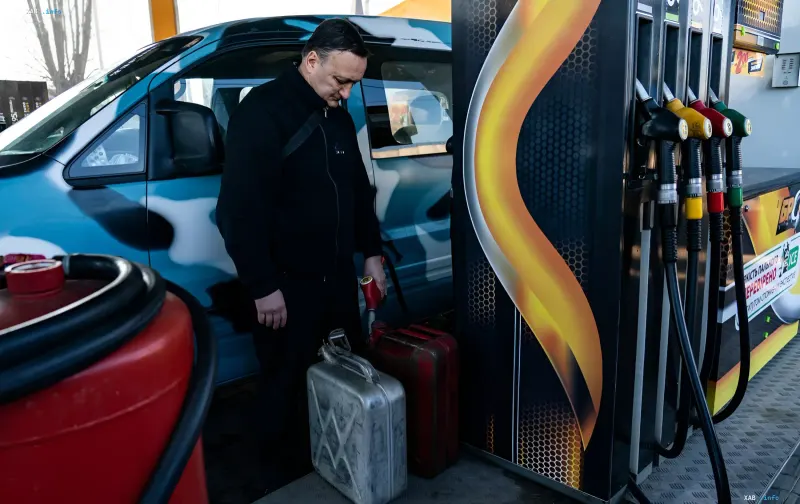
The petroleum products market in the Russian Federation is experiencing an unprecedented crisis. Restrictions on the sale of gasoline and diesel fuel, which previously had a local character, have acquired a federal scale. Strict limits have been introduced by the largest networks controlling about 25% of all gas stations in the country. In fact, every fourth gas station is now operating under new, harsh rules.
As reported by RBK-Ukraine, citing a study by the "Agency," a massive fuel collapse has forced the largest market players to urgently reduce sales volumes. Russian oil giants are trying to stop panic demand among drivers by introducing ultimatum refueling rules.
"Siege Fortress" Mode: Rules of the Largest Networks
The situation in key networks across the country looks critical. Major players have introduced diverse restrictions aimed at normalizing logistics and preventing the hoarding of fuel.
The strictest measures have been adopted by the "Tatneft" network, which has more than 850 gas stations. The company has completely restricted fuel sales throughout the Russian Federation. For passenger cars, there is a limit of up to 30 liters of gasoline and 60 liters of diesel per tank. Moreover, cashiers accept cash only, which creates additional difficulties for drivers.
"Rosneft" (2200 gas stations), "Bashneft" (500 gas stations), and "TNK" have introduced a strict ban on selling any fuel in jerry cans. Filling gasoline is permitted exclusively directly into the car's tank, with a limit of up to 90 liters per vehicle.
Other market participants have also joined the restrictive measures:
- "Lukoil" and Teboil have limited refueling to 100 liters per receipt.
- "Neftemagistral" has banned filling jerry cans with more than 20 liters.
Currently, restrictions of varying degrees of strictness have been recorded in more than 70 regions of the Russian Federation. Not only Moscow, the Moscow region, and St. Petersburg have been hit, but also the Kursk, Belgorod, Rostov, and Samara regions. In total, no less than 7,000 gas stations out of nearly 29,000 existing in the country have fallen under restrictions.
Crimea and Occupied Territories: Coupons and Queues
The most critical situation with fuel shortages is observed in the temporarily occupied territories of Ukraine by Russia, where logistics are practically paralyzed.
In annexed Crimea and Sevastopol, the free sale of gasoline has completely disappeared. AI-95 fuel at most gas stations is dispensed exclusively by special coupons and QR codes. In the so-called "DPR," gas stations operate only a few hours a day due to a total lack of reserves. In the occupied parts of the Luhansk, Zaporizhzhia, and Kherson regions, a strict limit has been set — no more than 20 liters per person.
Causes of the Crisis: Strikes on Infrastructure
The current large-scale crisis is a direct consequence of regular strikes by the Ukrainian Defense Forces on the enemy's fuel infrastructure. Previously, Ukrainian drones successfully attacked the Moscow Oil Refinery in the Kapotnya district. This facility is the largest oil refinery in the Russian capital and supplies about 35% of the entire Moscow fuel market.
The General Staff of the Armed Forces of Ukraine revealed details of the operation: as a result of explosions, the key primary oil processing unit ELOU AVT-6 was critically damaged, after which a powerful fire broke out at the enterprise. Due to the equipment failure, gasoline supplies to the central regions of the Russian Federation are under serious threat.
Against the backdrop of increased economic and military pressure on the aggressor, Ukrainian President Volodymyr Zelenskyy called on the European Union to accelerate Ukraine's accession to the EU as much as possible. According to the head of state, this will become one of the most effective responses to the constant terror from Russia, and the country is already fully ready to open all negotiation clusters.


