
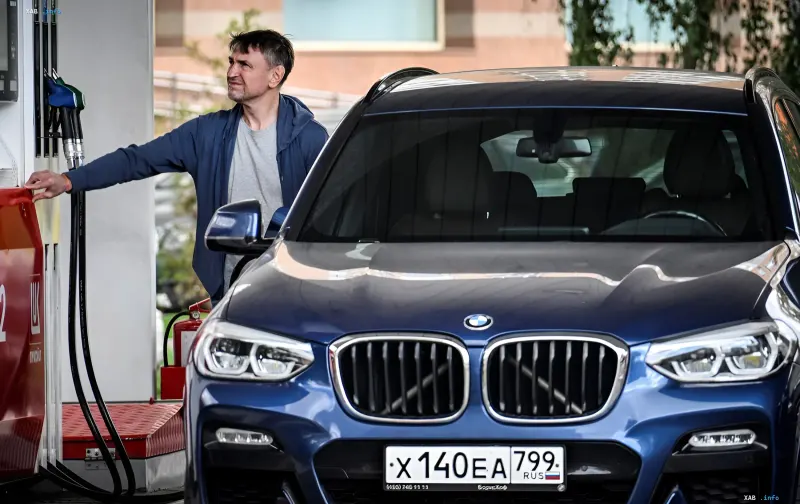
The situation with fuel in Russia and in the occupied territories of Ukraine has sharply worsened. If a shortage of gasoline was recently a local problem, restrictions on fuel sales now affect not only Crimea but also the largest cities of the Russian Federation — Moscow and St. Petersburg.
The cause has been large-scale drone strikes by Ukraine on oil refineries (OR). According to Bloomberg, in May alone, Ukraine launched at least 30 strikes on oil facilities, hitting 8 out of the 10 largest companies in the industry. The focus has shifted to secondary processing units, the repair of which has become particularly difficult and expensive due to sanctions.
Crimea: gasoline only by coupons
The most acute situation has developed in occupied Crimea. Since May 31, 2026, the authorities of the peninsula have introduced a coupon system for selling gasoline. In Sevastopol, the situation reached a critical point: it was announced the day before that the sale of fuel to civilians would be temporarily suspended. Only operational services can use gas stations.
Multi-kilometer queues are observed on the peninsula. The occupying authorities are trying to combat the shortage by introducing limits. For example, in the Luhansk region, the issuance of A-92, A-95 gasoline and diesel fuel has been limited to 20 liters per person per day, citing a "significant increase in demand".
Limits have reached Moscow and St. Petersburg
Fuel problems have ceased to be exclusively regional. In Moscow and the Moscow region, the "Odintsovo Regional Fuel Company" (ORTK) network of gas stations has introduced strict quotas: a maximum of 60 liters of gasoline and 100 liters of diesel are released to one person.
In St. Petersburg and the Leningrad region, similar measures have been taken at the "Kirishiavtoservis" network of gas stations. In the border Belgorod and Kursk regions, "Rosneft" gas stations stopped selling gasoline in cans, and in the Kursk region there is a limit of 20 liters on A-95. The newspaper "Kommersant" also reports a sharp rise in prices at capital gas stations due to complicated logistics.
Experts' opinion: crisis or temporary difficulties?
Despite the panic mood, the director of special projects at the "Psyche" Scientific and Technical Center, Gennady Ryabtsev, told RBC-Ukraine that it is still too early to talk about a global fuel collapse in Russia.
"They are doing fine with gasoline. There is no crisis in the Russian Federation. There is enough of all petroleum products to meet all needs," the expert said. According to him, the local problem in Crimea is related to the fact that Ukrainian drones have effectively severed the logistical chains connecting the peninsula with the mainland.
Ryabtsev explains that the restrictions in Moscow and St. Petersburg are temporary "echoes" after strikes on local refineries. After an attack, the plant is stopped for 2–3 weeks to assess the damage and repair, which creates a pause in shipments. "It turns out that agreements are signed, but the gas station tanker is still waiting because the military banned shipments," the specialist gives an example.
Export ban and Russia's strategy
In response to the situation, the Russian government has tightened control over the market. From June 1, a ban on the export of aviation kerosene has been introduced for six months — until November 30, 2026. The expert suggests that this decision was dictated by both political reasons (the desire to damage European carriers) and the growth of Russia's own needs.
Ryabtsev urges not to take publications about a "fuel collapse" at face value. In his opinion, the volume of oil refining in Russia has indeed decreased to the level of the 2009 crisis, but the aggressor country still has enough reserves of petroleum products. The ban on gasoline exports and restrictions on intermediaries are traditional practices that Moscow has applied even before the start of the full-scale war for internal balance.


