
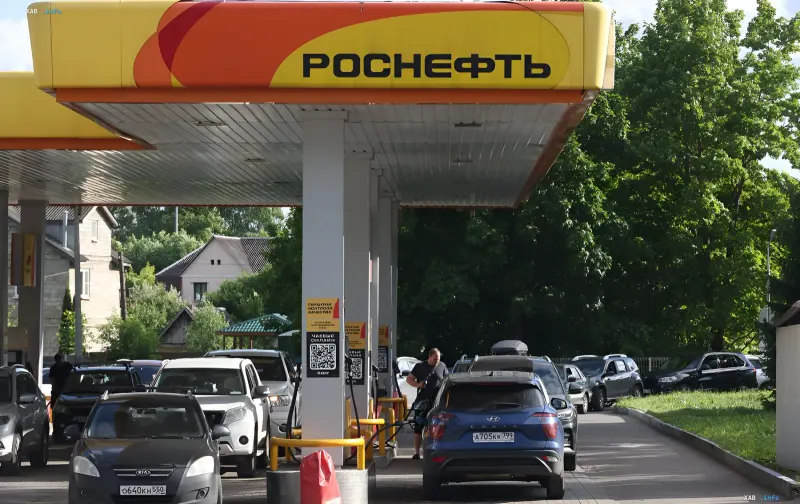
Russia is facing a major fuel crisis. According to Reuters and industry sources, gasoline production covers only about 65% of seasonal demand. The country is short 40–45 thousand tons of fuel daily — nearly a third of the required volume. During the peak summer period, demand reaches 115–120 thousand tons per day, but refinery capacities are already insufficient.
Attacks on Refineries and Production Drop
The sharp decline in supplies was caused by Ukrainian drone strikes on key oil refineries. Major facilities such as NORSI and the Omsk Refinery — among the country’s largest gasoline producers — have been taken out of operation. The Saratov Refinery has also sustained damage. These plants previously supplied a significant portion of the domestic market.
As early as June, the deficit stood at 25%, but by July it rose to critical levels. Domestic reserves are depleting rapidly, and the resumption of refinery operations depends on the absence of new attacks.
Imports and Export Ban
The Russian government is discussing a ban on the export of diesel fuel, aviation kerosene, and gasoline. At the same time, the country is boosting imports: in June, supplies from Belarus reached a monthly record — up to 6 thousand tons of gasoline per day. Additionally, according to Reuters sources, Russia has begun sea shipments of fuel from India.
Government and Public Reaction
Deputy Prime Minister Alexander Novak publicly acknowledged the complexity of the situation during a government meeting. He noted that “the current situation at gas stations is causing concern among the public”.
In the resort town of Anapa, Cossacks have been deployed to maintain order in queues at gas stations. One of them, Yury Komarov, said he helps distribute drivers between pumps. According to him, buyer behavior has changed drastically: whereas people used to fill up with just 10 liters, now they fill the entire tank “just in case.” Komarov believes this is what triggered the panic buying.
Forecasts and Restrictions
Industry sources suggest the market may stabilize in the second half of July — provided there are no new strikes on refineries. In that case, enterprises could gradually resume operations, and imports would increase.
Gasoline prices in Russia already reached a 20-year high in June. Dozens of regions, including the Khanty-Mansi Autonomous Okrug (where about 40% of Russia’s oil is produced), have introduced restrictions on fuel sales. At the end of June, Moscow requested Kazakhstan to supply 50 thousand tons of AI-92 gasoline.


