
The Kremlin has officially confirmed the fact of negotiations with foreign partners regarding the import of oil products. Presidential Press Secretary Dmitry Peskov stated that the relevant ministries are in the active phase of discussing supply terms. According to information received on June 30, 2026, the list of supplier countries is not disclosed; however, the goal of the initiative is unambiguous — stabilizing the domestic market of Russia.
Causes of imbalance: refinery repairs and falling trade
The need to attract external volumes of fuel arose against the backdrop of a sharp imbalance between supply and demand in June 2026. Market analysts link the current situation to large-scale unscheduled repairs at a number of major Russian oil refineries (ORs). The reduction in primary processing capacity led to a shortage of light oil products.
The situation was clearly reflected in the indicators of the Saint Petersburg International Mercantile Exchange (SPIMEX). By the end of June, the volume of exchange trading in gasoline and diesel decreased by 13.5%, which inevitably caused an increase in wholesale quotes. To prevent a shortage in retail, the government switched to a mode of "manual control" of the market.
Stabilization mechanisms and logistics
Operational monitoring of the situation is handled by Deputy Prime Minister Alexander Novak. As part of the counteraction to the crisis, the Ministry of Energy and JSC "Russian Railways" were instructed to ensure priority transportation of fuel to regions with complex logistics. Two main vectors of import are being considered:
- Railway supplies from countries of the Eurasian Economic Union (EAEU).
- Spot purchases by sea from states in the Asia-Pacific region.
The legal basis for such actions is Decree of the Government of the Russian Federation No. 241, which allows for the introduction of temporary restrictions and special regimes for regulating exports and imports to ensure economic security.
Regional specifics: from Moscow to Crimea
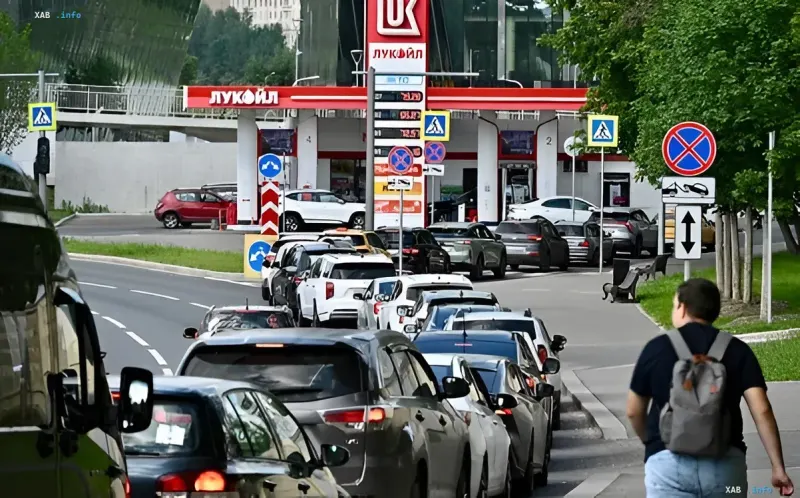
The consequences of the imbalance are already felt by end consumers. In the Moscow region and in the south of the country, a change in consumer behavior is recorded. Social media is seeing reports of a significant increase in waiting times at gas stations of major oil companies, including the PJSC "Lukoil" network.
Particular tension is observed on the Crimean Peninsula. At the height of the tourist season, demand for fuel exceeds the capabilities of local logistics. Car owners report shortages at individual gas stations, forcing drivers to stock up on fuel in jerry cans. Official representatives of regional authorities assure that strategic reserves in storage facilities are sufficient for the operation of critical infrastructure, and current problems are exclusively logistical in nature and related to an increase in the turnover time of railway tank cars.


