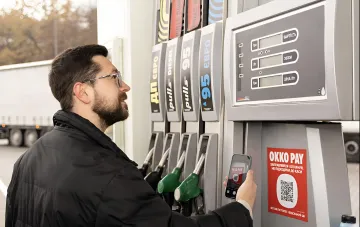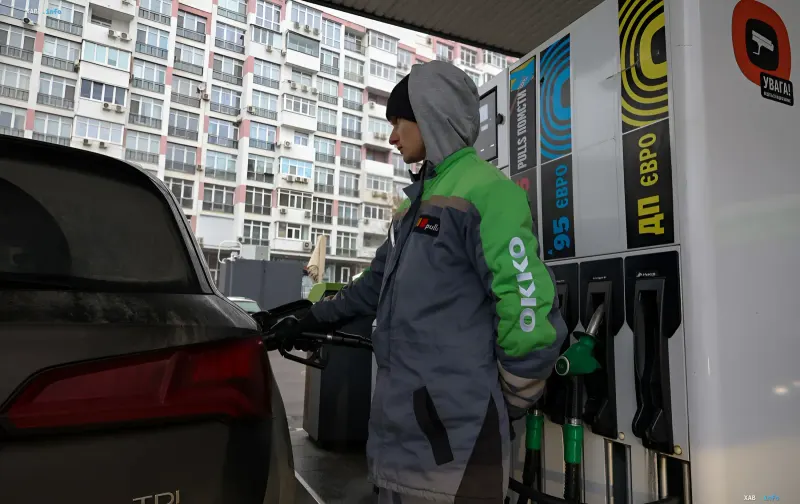
As of October 18, Ukraine's automotive fuel market continues to show a steady upward trend in prices for diesel fuel and autogas. Another price hike was recorded at one of the leading networks, OKKO, which revised the cost of key grades upward. Meanwhile, other major operators—WOG, SOCAR, Ukrnafta, and UPG—kept their figures at previous days' levels without new fluctuations, making the current picture mixed: dynamics are driven by individual network decisions rather than a uniform industry-wide jump.
Price increases at OKKO
The OKKO network raised prices by exactly one hryvnia per liter across key grades. Pulls diesel went up to 106.90 UAH/liter, and Euro diesel rose to 103.90 UAH/liter. Autogas at this network also increased by one hryvnia and now costs 51.90 UAH/liter. Thus, diesel and gas remain the main drivers of price growth, while gasoline grades within the network show no comparable movement.
Stability among other operators
Unlike OKKO, the WOG, SOCAR, Ukrnafta, and UPG networks kept prices at the previous day's level with no new fluctuations. This means that for motorists refueling at these networks, fuel costs on October 18 remained unchanged. The difference in dynamics among operators highlights that pricing decisions are currently made independently, depending on each company's internal logistics and procurement terms.
Record levels in the segment
Across the entire segment, autogas in most major networks has firmly settled above the 49–52 hryvnia per liter mark, while premium diesel at individual filling stations is approaching 107 hryvnias per liter. Meanwhile, baseline А-95 gasoline remains stable and is not participating in the current rise. A steady price fork is forming: gas and diesel are getting more expensive, while gasoline is not, which is important to consider when planning fuel expenses.
Causes and forecasts
According to fuel market expert and A-95 consulting company director Serhiy Kuyun, high prices and their further increase until the end of October are linked to the risk of temporary supply disruptions caused by strikes on fuel infrastructure, which could intensify panic demand at gas stations. The expert previously recommended that drivers maintain a personal fuel reserve for two to three weeks (about 50–70 liters for a car with a consumption of about 100 liters per month). The industry has remained one of the targets of shelling since the beginning of the full-scale invasion, and high volatility in the fuel market, according to specialists, may persist until the end of autumn.