
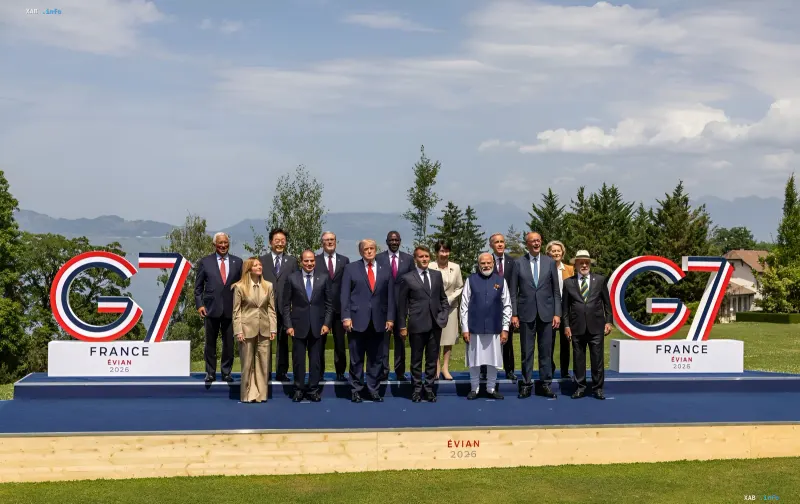
Leaders of the Group of Seven (G7) have issued a joint statement reaffirming their strengthened support for Ukraine and promising a new, powerful package of sanctions against Russia. The document was adopted against the backdrop of successes by the Ukrainian Armed Forces (AFU) on the front lines and shifts in the geopolitical situation in the Middle East.
New Momentum on the Front
In the communique, G7 heads of state emphasized unity in supporting Ukraine's sovereignty and territorial integrity. Leaders highlighted the resilience of the Ukrainian people in the face of regular strikes on critical infrastructure and cultural heritage.
"We commend Ukraine for its resilience and battlefield successes in recent months and underscore that a new momentum has emerged," the official statement reads.
To consolidate this success, the G7 nations have agreed on specific steps for military assistance:
- Strengthening Air Defense: Urgent increase in supplies of air defense systems, anti-aircraft systems, and interceptor missiles to protect airspace.
- Strikes on the Rear: Significant ramp-up of long-range weapon supplies for attacks on enemy rear areas.
- Military Production: Considering the possibility of granting Ukraine special licenses, which would allow for the legal increase of foreign weapon production at Ukrainian factories.
Special attention was paid to winter preparations: the G7 promised to allocate additional funds and equipment to ensure the country's energy resilience.
Sanctions Against Russia and Trump's Role
A key point of the statement was the commitment to intensify economic pressure on the Kremlin's war machine. Western leaders announced the introduction of a new sanctions package targeting Russia's oil and gas sectors.
The uniqueness of the moment lies in the changing situation in the Middle East. G7 leaders explicitly pointed to the role of the agreement concluded by US President Donald Trump:
"We believe that now is the appropriate time to introduce additional measures, as President Trump has concluded an agreement, which we support, on the reopening of the Strait of Hormuz".
Thanks to the cessation of hostilities between the US and Iran, the Strait of Hormuz is once again open to civilian vessels. The return of Iranian oil to the global market has allowed the West to tighten the screws on Russian fuel exports without fearing a global energy crisis.
Systemic Approach to Weakening Russia
The American leader demonstrated a willingness to exert tough pressure on the Kremlin during the G7 summit in France. European partners also supported the intensification of sanctions. In particular, Brussels has already prepared the 21st EU sanctions package.
As noted by Vladyslav Vlasyuk, the President of Ukraine's Commissioner for Sanctions Policy, the new approach is systemic. Restrictions now affect not only arms manufacturers but also key economic sectors: energy, financial services, trade, the cryptocurrency sphere, and fisheries.


