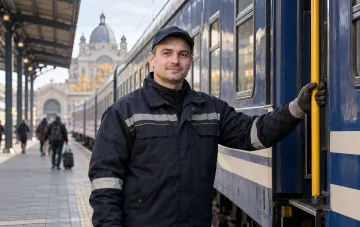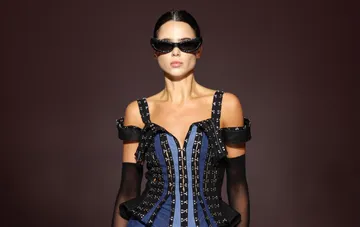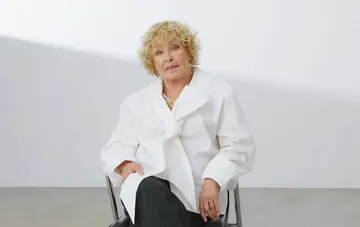
The Ukrainian brand Gaptuvalnya has unveiled a new autumn-winter collection of clothing and accessories, inspired by the retro aesthetics of the 1960s and the song 'Roses on the Platform'. Dedicated to Railway Worker's Day, the collection combines traditional Ukrainian ornaments, cross-stitch embroidery, and rich color palettes. The concept is centered around the image of a railway platform as a place of meetings and farewells, where personal stories intersect. The brand draws a conscious parallel with modern realities, where evacuations, delays, and constant changes in routes have turned separation and waiting into part of the everyday experience for millions of people.
The platform as a space of memory and waiting
The central visual motif of the collection is longitudinal embossed ornaments created using cross-stitch techniques. Designed to mimic the long rails and the edges of railway platforms, these lines represent where people wait for family, friends, and loved ones. Between the ornamental lines, images of roses are placed, symbolizing feelings that endure despite distance and anxiety. While the collection continues Gaptuvalnya’s signature 'white on white' monochromatic direction, new red and dark tones have been added, providing depth and drama. Materials used include linen, velvet, and wool, ensuring tactile richness and seasonal suitability.
Model names as song lyrics
Each model in the collection is named after a line from the song 'Roses on the Platform'. These include 'Lady' who threw flowers, 'Crying Meetings', 'Kisses' given to someone, and 'Roses' that scream to people with their petals. This approach turns the clothing into a narrative carrier: each piece is not just an item of clothing, but a fragment of a story about love, separation, and the hope for a reunion. The poetic semantics of the names enhance the emotional response and link the collection to the cultural code of several generations of Ukrainians, for whom this song remains a recognizable sound symbol of the era.
Form, construction, and range
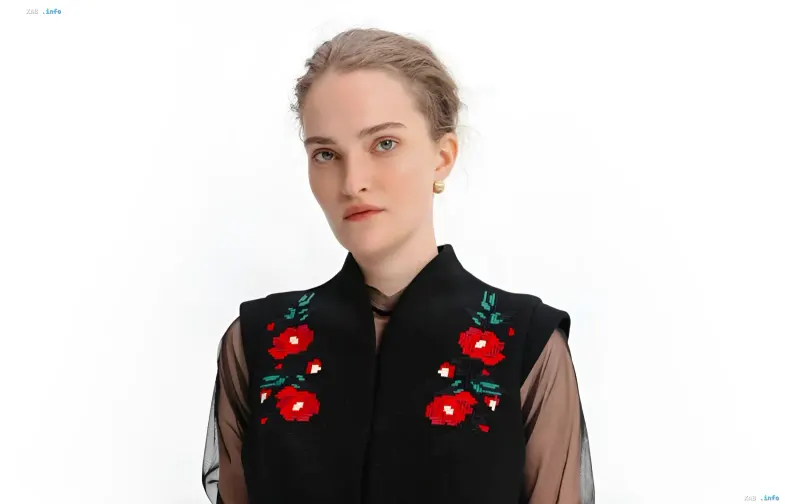
The collection features blouses and dresses with lace collars and sleeves, the shape of which can be adjusted thanks to integrated straps. This structural solution allows the silhouette to be adapted to different wearing styles, increasing the functionality of the pieces. The brand also introduced 'keptaryky' (traditional vests) in three variations: cropped, with a peplum, and with pockets. The collection is complemented by an elongated skirt, wool vests, and accessories such as a peplum, scarves, and a small pocket. This set of items allows for building a complete look from a base layer to a finishing accessory while maintaining a unified visual language.
Embroidery as the brand's language
The cross-stitch technique, which has become a signature of Gaptuvalnya, takes on additional meaning in this collection. The pixelated structure of the embroidery creates a 'digital' retrospective effect, where traditional manual labor echoes the aesthetics of pixel art and early computer graphics. Red rose motifs on a dark background create a contrast that makes the pattern legible even from a distance. Monochromatic 'white on white' inserts add texture and depth without overwhelming the overall silhouette. Thus, the embroidery performs a dual function—decorative and narrative—turning fabric into a surface upon which the story of the platform, expectation, and meeting is 'recorded'.
The Gaptuvalnya 'Roses on the Platform' collection demonstrates a consistent trend among Ukrainian designers to interpret current social contexts through the lens of traditional crafts and cultural archetypes. The railway platform, once a mundane element of urban infrastructure, becomes in this work a metaphor for the collective experience of separation and hope, while cross-stitch becomes a tool through which personal and social narratives are stitched into a single whole.