
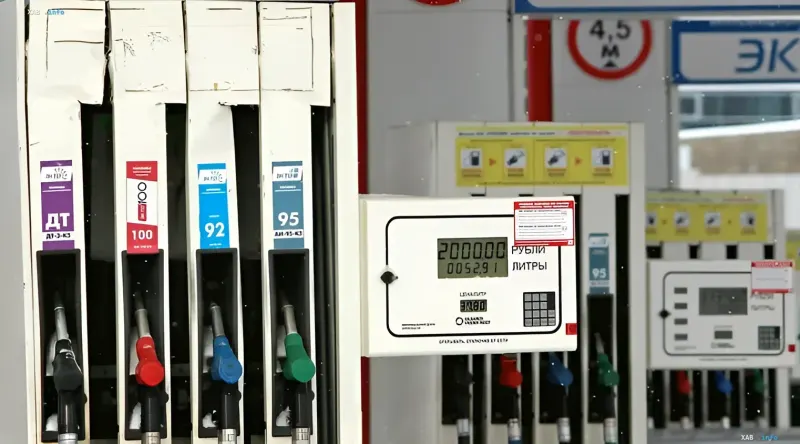
In June 2026, the Russian fuel market faced an unexpected change in the rules of the game. The Government of the Russian Federation made adjustments to the Federal Plan of Statistical Works (FPSW), effectively canceling the weekly detailed bulletins on petroleum product prices. The decree signed by Mikhail Mishustin, No. 1614-r, removed item 1.5.13 from mandatory reporting, which for years had served as the main benchmark for analysts, traders, and ordinary drivers.
What exactly disappeared from the report?
Before the decree was signed, the Federal State Statistics Service (Rosstat) published a detailed weekly monitoring of retail prices. The sample covered more than 1,800 gas stations in 280 urban districts across all regions of the country. The report contained a breakdown by key fuel brands — AI-92, AI-95, AI-98 gasoline, and diesel fuel. Now, this information is no longer a separate document.
The decision was made against the backdrop of a sharp price increase. In the week before the changes took effect (from June 16 to 22), the average cost of gasoline across the country rose by 3.0%, and diesel by 2.7%. It was at this moment, when the market was demonstrating high volatility, that the state decided to simplify the data collection mechanism.
Official version: optimization, not secrecy
Rosstat's press service hastened to refute rumors of a complete shutdown of data. The agency stated that monitoring has not ceased but has merely been transformed. Now, price data will be published as part of general reports on the Consumer Price Index (CPI), released on Wednesdays.
The agency's official position boils down to the optimization of internal regulations. As noted at Rosstat, the exclusion of item 1.5.13 is aimed at eliminating the duplication of indicators in different reporting forms and reducing the burden on the budget. From the officials' point of view, aggregated data within the CPI framework sufficiently reflect the situation in the market.
Market reaction: loss of navigation
However, market participants assess the innovation differently. For brokerage companies and traders of the Saint Petersburg International Mercantile Exchange (SPIMEX), detail was critically important. The lack of operational information on specific networks and regions complicates commercial planning and the assessment of supply and demand imbalances.
Experts note that under the current regime of state regulation of export flows, data transparency becomes even more significant. Without detailed monitoring of 1,800 points, it becomes more difficult to identify local anomalies and speculative price spikes in individual Russian regions.
Legal grounds and consequences
Changes to the FPSW are legitimate from a legal standpoint. According to Article 5 of Federal Law No. 282-FZ "On Official Statistical Accounting", the government has the right to adjust the work plan taking into account the need to optimize expenditures and ensure national security.
Nevertheless, experts warn of the risks of reduced market transparency. If previously any researcher could track price dynamics in a specific region, now access to disaggregated information is limited. This may lead to the fact that real price fluctuations at the local level will go unnoticed at the federal level until they are reflected in general indices.
The situation remains uncertain: the state claims routine optimization, while the market sees this as a step towards reduced transparency during a period of high inflation. The coming months will show how well the new reporting system can replace the familiar detailed monitoring.


