
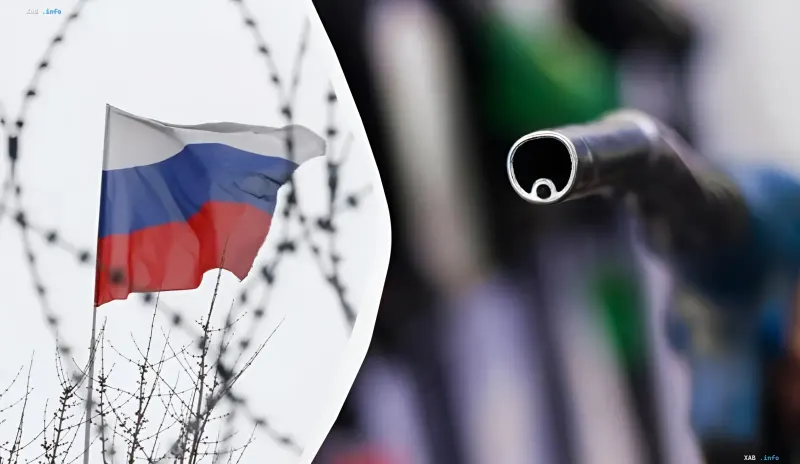
The summer season of 2026 has become a period of unprecedented stress for the Russian fuel industry. According to an analytical report by Reuters dated July 10, the production of automotive gasoline in the country has dropped to critical levels, covering only 65% of current seasonal demand. The situation in the market has shifted from a phase of tension to a stage of acute crisis, caused by physical damage to key production capacities.
Scale of capacity loss and logistical gap
During peak summer months, Russia traditionally consumes between 115,000 and 120,000 tons of gasoline daily. However, in the first decade of July 2026, the gap between demand and supply reached 35%. This means that the market is missing out on 40,000 to 45,000 metric tons of fuel daily. For comparison, in June the deficit was 25%, indicating an acceleration of negative dynamics.
The main reason for the decline in volumes was the forced shutdown of primary processing lines and catalytic cracking units at the country's largest plants. The enterprises forming the basis of the fuel balance were hit:
- Nizhnekamsknefteorgsintez LLC (Lukoil): One of the key enterprises in the European part of the Russian Federation for the production of high-octane gasoline has suspended the operation of main lines.
- Gazpromneft-Omsk Refinery JSC: The largest plant in Siberia suspended operational processes following incidents in early July.
- Saratov Refinery PJSC (Rosneft): The enterprise also recorded a complete suspension of the production cycle.
Export ban and search for alternatives
In response to the threat of a fuel collapse, the Government of the Russian Federation activated regulatory levers. A full temporary ban on the export of diesel fuel, automotive gasoline, and aviation kerosene has been introduced. According to WTO norms and international trade law, such unilateral restrictions are recognized as legitimate measures to protect the domestic market in conditions of acute shortage or threat to national security.
To compensate for the lost volumes, complex logistical schemes have been launched. Daily supplies from the Republic of Belarus (up to 6,000 tons of gasoline) have been organized, and spot sea purchases in Indian ports have begun. Additionally, reserve stocks from state and commercial oil depots are being brought into circulation.
Political context and government reaction
Deputy Prime Minister Alexander Novak, during a government meeting, characterized the situation in the energy sector as "complex," acknowledging the justified concern of consumers. In a number of regions, local administrations are forced to introduce temporary fuel distribution algorithms to avoid panic at gas stations.
At the same time, the General Staff of the Armed Forces of Ukraine officially confirmed that strikes on Russian refineries are being carried out as part of a defensive strategy. The goal of the attacks is named as the destruction of the logistical potential of the military-industrial complex and the reduction of mobilization resources. The Russian authorities are trying to stabilize the situation through exchange mechanisms, obliging market participants to increase trading volumes on the Saint Petersburg International Mercantile Exchange (SPIMEX).


