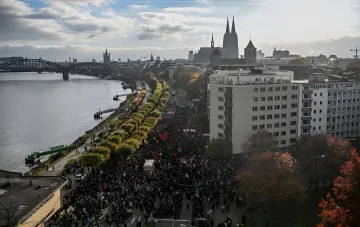
On October 31, 2026, tens of thousands of people took to the streets in several major German cities to express their disagreement with the policies of German Chancellor Friedrich Merz and his team. The rallies were coordinated by the youth movement "Gen Z hat genug!" ("Gen Z has had enough!"), which announced protests in twelve cities across the country simultaneously. According to the organizers, a total of over 68,000 people took to the streets, although official nationwide police data at the time of publication had not yet been released.
Geography and Turnout
The highest concentration of protesters was recorded in Berlin, where an estimated 5,000 people gathered. In Stuttgart, about 3,000 participants took to the streets, and in Hamburg, more than 2,000. Authorities and law enforcement agencies in several cities cite figures lower than the organizers' estimates, so the final nationwide picture remains preliminary and will be updated as data from all twelve cities comes in.
Demands and Slogans
Among the key demands of the protesters are a reduction in the cost of living, increased funding for education, and climate protection. Youth are also speaking out against increased military spending, cuts to social welfare, and the possibility of military conscription. Posters and banners featured slogans such as "Education instead of shooting" and "No to conscription," while chants calling for the resignation of Chancellor Friedrich Merz echoed repeatedly through the crowd. Participants complained about a decline in their quality of life and linked it to the current government's course.
Course of Protests and Clashes with Police
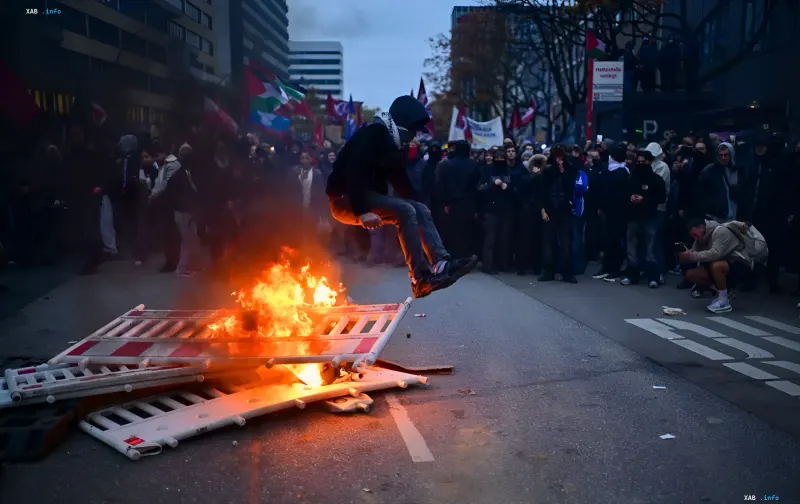
The nature of the protests varied across cities. In Wesel, the demonstration began early in the day at a shipyard and remained largely peaceful for several hours, interrupted only briefly by a few masked individuals. At the same time, riots broke out in Hamburg: fires and garbage cans were set ablaze in the crowd, objects were thrown at police officers, and fireworks and pyrotechnics were launched, prompting police to disperse the crowd. According to journalists, protesters built barricades, lit flares, and set off firecrackers, while activists waved Palestinian flags; in one incident, police deployed two water cannons and turned them on the crowd. At the central bus station, participants pelted law enforcement officers with fireworks and bottles, after which police spread out across several streets and pushed bystanders toward the main railway station. Due to the risk of clashes, shop owners fortified their storefronts.
Assessments and Broader Context
The Gen Z regelt initiative publicly claims over 68,000 participants across twelve cities, while nationwide police data is not yet available, and in individual cities, police estimates are lower than those of the organizers. Thus, the exact number of protesters remains a point of divergence between the parties. In a broader context, the rallies in Germany fit into a wave of youth protests in Europe: earlier reports highlighted protesters' demands in the Czech Republic and demonstrations in Barcelona escalating into clashes with law enforcement.