
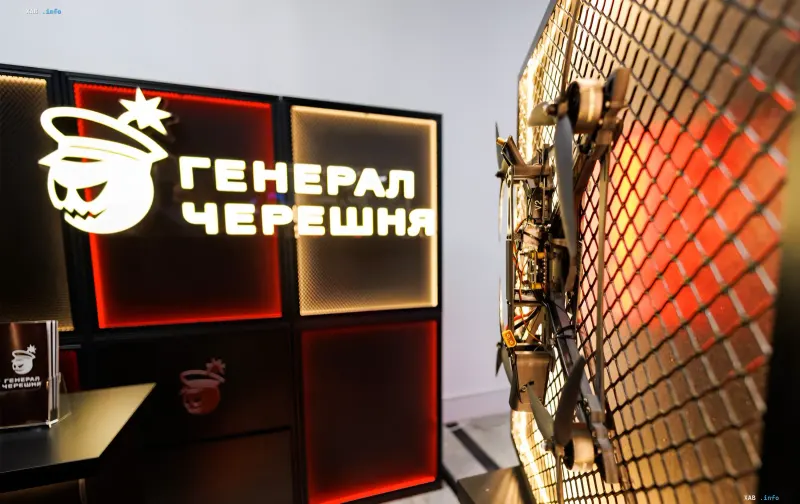
Ukrainian defense industry has made a significant step in the evolution of air defense systems. The 'General Cherehnya' project and STRIX company have signed a strategic partnership agreement aimed at developing cutting-edge technologies for the modern battlefield. The focus of this collaboration is artificial intelligence and the creation of specialized next-generation interceptor drones.
Response to Escalation: The 'Geran-4' Threat
The need for new developments is dictated by the changing tactics of the enemy. The appearance of jet-powered modifications of 'Shahed' drones has created a fundamentally new level of threat to Ukrainian airspace. While classic Shahed-136 drones flew at a relatively predictable speed, their new versions are equipped with upgraded engines capable of reaching speeds up to 600 km/h.
Such dynamics significantly complicate the task for traditional air defense systems. It is precisely to neutralize these high-speed targets, including the complex 'Geran-4' modification, that the new line of interceptors was created.
Technological Synergy: 'General Cherehnya BULLET'
The result of this collaboration is the development of the 'General Cherehnya BULLET' interceptor. As reported in the description of test footage published by RBK-Ukraine, the new system is based on a kinetic accelerator from STRIX. This technology has already successfully passed tests a year ago, which allowed for an accelerated implementation into combat use.
The main goal of this technological synergy is to scale the counteraction to enemy strike UAVs and ensure the effective destruction of all their modifications.
Proven Reputation: Statistics and Experience
The 'General Cherehnya' project has already established itself as one of the largest manufacturers of FPV drones in Ukraine. The company's flagship model, 'General Cherehnya AIR', is in service with more than 100 combat brigades of the Armed Forces of Ukraine. This drone has dozens of thousands of successful enemy aerial target interceptions to its credit.
The list of neutralized threats includes:
- 'Molniya' (Lightning);
- 'Lancet';
- 'Orlan';
- 'Gerbera';
- 'Italmas';
- Supercam and Zala.
The effective operation of these systems in the sky directly influences the outcome of hostilities, saving the lives of Ukrainian warriors, preserving combat positions, and ensuring the security of logistical routes.
Official Recognition
An important stage in the history of the project was official recognition by the state. In 2025, the Ministry of Defense of Ukraine codified and approved for use on the front lines the 'General Cherehnya' unmanned FPV aviation complex. This decision solidified the status of the developments as a standard for the armed forces, paving the way for further scaling of production and the implementation of innovations.


