

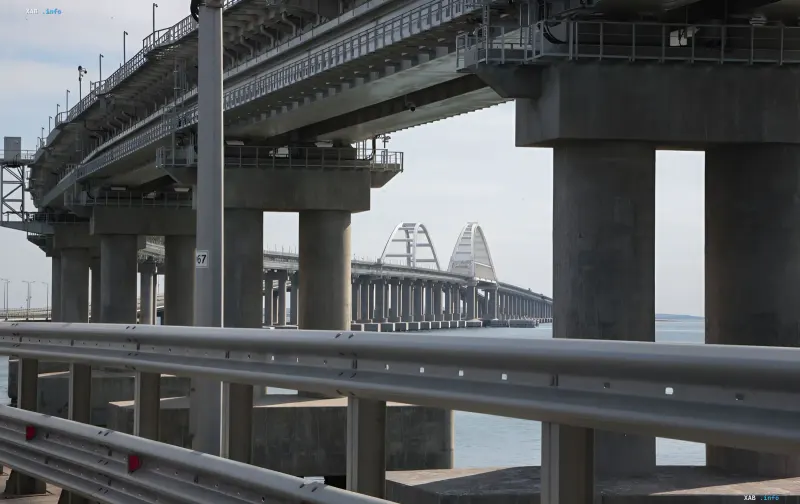
On November 17, 2026, the Crimean Bridge, which connects the peninsula with the mainland of Russia across the Kerch Strait, suffered severe damage as a result of an attack by Ukraine's Defense Forces. According to the General Staff of the Armed Forces of Ukraine, the strike caused the bridge's arch and road span to collapse, while the railway section, which remained standing, also sustained damage. Traffic across the bridge has been completely halted. This was reported by RBC-Ukraine, citing an official statement from the military department.
Scale of damage and consequences for logistics
According to the General Staff, due to the destruction of the road portion of the bridge, vehicular traffic became impossible. The railway section of the crossing survived, but its arch is also damaged. The military department emphasized that this is 'not a symbolic strike' for Russia, as the bridge served as the main artery supplying fuel, ammunition, equipment, and personnel to the peninsula and further into the south of Ukraine. 'For years, Russia built a myth around it about a 'forever Russian' Crimea, and now this very structure is partially lying in the water,' the General Staff stated.
Chronology: Two strikes in a day
The Crimean Bridge was attacked twice—on November 16 and 17. Following the first strike on November 16, satellite imagery recorded damage to the road surface in several areas and deformation of the arch. On the night of November 17, explosions rang out again in the Kerch Strait area. Traffic across the crossing was stopped, and OSINT public channels on social media reported the collapse of part of the road span and arch into the water. Thus, by the morning of November 17, the damage to the bridge had become irreversible.
Preparation: Multi-week air defense suppression operation
The General Staff specified that the November 17 attack was the final stage of a prolonged operation. Over the course of several weeks, Ukrainian units systematically disabled Russian air defense systems, electronic warfare equipment, and radar systems. According to the military department, this created the conditions for a comprehensive strike using Ukrainian weapons. Ukrainian President Volodymyr Zelenskyy confirmed the operation and listed the types of weaponry deployed during the strike: FP-5 'Flamingo', R-360 'Neptune', 'Palianytsia', 'Ruta', and FP-1.
Strikes on other crossings
The General Staff's report also mentioned that amid the attack on the Crimean Bridge, other crossings used by Russia for logistical supplies to the peninsula were also damaged. This refers to the bridges across Chongar and in Henichesk. The military department indicated that together, these strikes make the occupying forces' ability to transport military cargo to the south of Ukraine by land 'increasingly limited.'
Context and significance for future developments
The Crimean Bridge, opened in 2018, had remained a key infrastructure facility ensuring the peninsula's overland connection with the mainland for eight years. Its partial destruction, confirmed by both the Ukrainian military and independent OSINT observers, calls into question the resilience of the supply chains Russia relied on to supply its troops on the peninsula. Future dynamics—including whether attempts will be made to rapidly restore the crossing or if Russia will redistribute freight traffic to maritime and other overland routes—will become a key factor in assessing the military situation in the south of Ukraine in the coming weeks.


