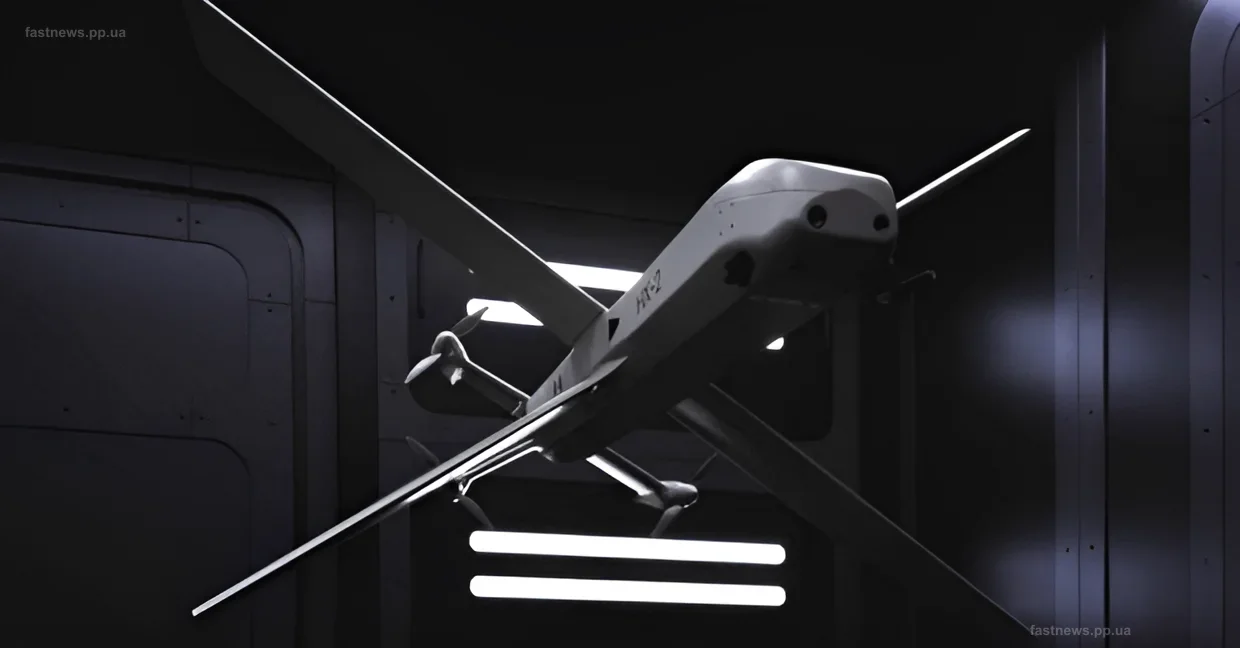
On the battlefield, price often dictates strategy. In the context of a prolonged war, where expendable materials play a critical role, the emergence of affordable yet technologically advanced weaponry changes the rules of the game. German company Helsing has presented its answer to Russian attack drones to the world — the HX-2 model, which has already begun arriving in Ukrainian forces by the thousands.
The main trump card of the novelty is not only its effectiveness but also its surprising cost. According to Defense Express, the price of one HX-2 loitering munition is just 17,000 euros. This places the German drone alongside the most economical solutions on the market, while its characteristics do not lag behind, and in some aspects even exceed, its analogues.
The Economics of War: Comparison with Russian Analogues
To understand the scale of savings, it is worth comparing the HX-2 with the Russian 'Lancet'. Advisor to the Minister of Defense of Ukraine, Serhiy Beskrestnov, previously stated the cost of the 'junior' version of the 'Lancet' ('Product 52') at $40,000. The more powerful modification ('Product 51') costs $68,000.
The mathematics here are simple and impressive: the German HX-2 is more than twice as cheap as the Russian 'Product 52', and compared to 'Product 51', the difference reaches almost 3.5 times. At the same time, the HX-2 offers characteristics close to the 'senior' version of the Russian drone.
- Flight Range: The Russian 'Product 52' reaches targets at a distance of up to 50 km, 'Product 51' — up to 130 km. The German drone approaches the more powerful Russian analogue in terms of range.
- Warhead: The payload mass of the HX-2 is 4.5 kg. For comparison: 'Product 52' has 3 kg, and 'Product 51' has about 5 kg. The German drone occupies a confident intermediate position.
Artificial Intelligence and Swarm Tactics
Low price does not mean a simplified design. On the contrary, the HX-2 is equipped with advanced combat artificial intelligence. This allows the drone to maintain operability and accuracy even in conditions of dense electronic warfare, when communication with the operator may be disrupted.
Another strategic advantage is integration with the Alta control system, developed by the same company Helsing. This opens the way to the use of 'swarm' tactics, where groups of drones act in coordination, overloading the enemy's air defense systems and delivering massive strikes.
Production Scale and Competition
The potential of German production is huge. Earlier, Helsing signed a contract with the Bundeswehr to supply 4,300 HX-2 drones for 270 million euros. Experts believe that this amount includes not only the devices themselves but also launchers, software, logistics, and training, which only underscores the real accessibility of a single unit.
On the other hand, Russia is forced to react to the appearance of such competitors. Competition within the Russian defense complex and the emergence of new models, such as the guided munition 'KUB-10ME' from the Kalashnikov concern with a range of more than 100 km, testify to the desire to reduce the cost of attack drones. However, for now, the German solution looks the most balanced in terms of 'price-quality' ratio for the needs of the Ukrainian army.


