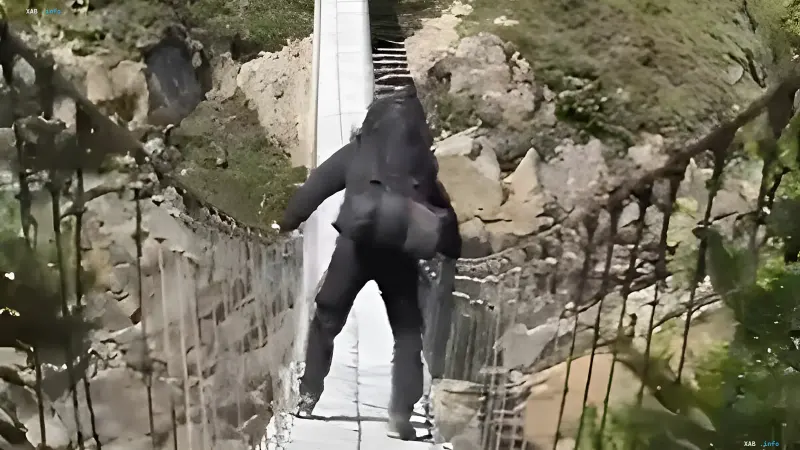
German tourist Henry Thomas became the subject of a harrowing episode while traversing one of South America's most popular hiking trails. The seven-day O Circuit trek in Torres del Paine National Park in southern Chile, according to the New York Post, turned into a survival test for him: a violent storm caught the traveler in the middle of a narrow suspension bridge, which began to swing violently in the gusts of wind. Thomas, laden with an 18-kilogram backpack, had to struggle to keep his balance so as not to lose his footing more than 20 meters above the ground.
The O Circuit Route: Seven Days in the Heart of Patagonia
The O Circuit is one of the iconic multi-day hiking trails in Torres del Paine National Park, stretching across the scenic valleys, glacial lakes, and rock formations of southern Chile. The seven-day trek attracts thousands of tourists from around the world every year, but completing it requires good physical fitness and readiness for sudden weather changes. It was on this route that Henry Thomas found himself at the moment a violent storm rolled over the valley, turning an ordinary hiking crossing into an extreme situation.
A Bridge 20 Meters High: The Seconds That Decided Everything
According to park authorities, the suspension bridges in the O Circuit area are located at a height of more than 20 meters. When Thomas stepped onto the narrow pedestrian structure, gusts of wind suddenly made the bridge sway. With an 18-kilogram backpack on his back, he had to fight for balance in the truest sense, holding on to the railings and stepping across the swaying planks. A critically important detail was that his companion had crossed the bridge a few seconds before the storm gust began and was safe. Thomas, however, was trapped between the growing wind and the unstable structure, with no way to quickly turn back or speed up forward.
The Patagonian Climate: When Weather Is the Main Risk Factor
The Patagonia region, where Torres del Paine National Park is located, has long been known among climbers and trekkers for its unpredictable weather. Strong winds, which can reach speeds comparable to tropical storms, are not an exception but rather the norm in this part of the world. Meteorologists and local guides regularly warn travelers that even on a clear day the weather can change dramatically within minutes. The incident with Henry Thomas vividly demonstrates how quickly a calm hiking crossing can turn into a dangerous situation if a tourist has not taken the region's climatic features into account.
Infrastructure Safety and Tourist Responsibility
Torres del Paine National Park is considered one of the most famous areas for hiking in South America, and the park administration pays attention to the condition of the infrastructure, including the suspension bridges. Nevertheless, even reliable structures cannot fully neutralize the impact of extreme weather phenomena. Trekking experts recommend that tourists planning to complete the O Circuit closely monitor the weather forecast, avoid crossing bridges during strong winds, and not neglect lightweight gear to reduce the load on the body in a critical situation. Thomas's story, fortunately, ended well, but it once again raises the question of the balance between the accessibility of popular routes and the real climatic risks that travelers face in Patagonia.