
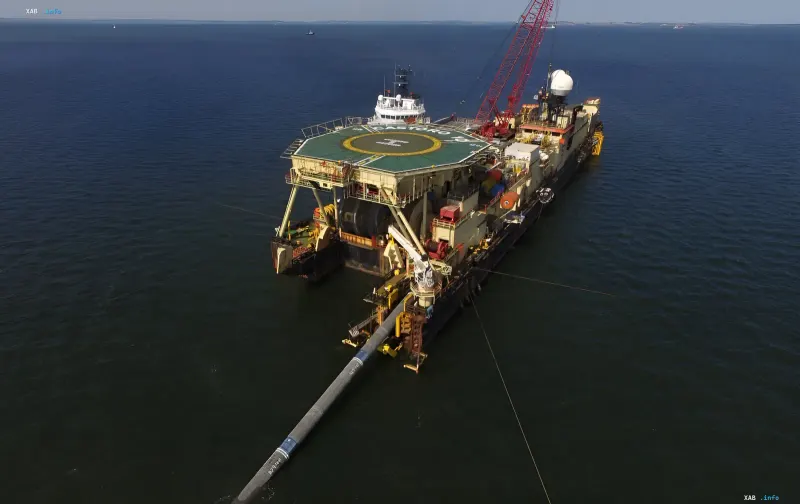
The Federal Prosecutor's Office of Germany has officially charged a Ukrainian citizen in connection with the sabotage of the Nord Stream gas pipelines. The charges concern attacks on civilian energy infrastructure that resulted in explosions and the destruction of facilities on the floor of the Baltic Sea.
Information regarding the filing of charges was confirmed by Ukrainian President Volodymyr Zelenskyy during a joint press conference with Irish Prime Minister Micheál Martin. The head of state noted that he does not yet possess full details of the proceedings and that the official Kyiv has not yet received exhaustive information from German colleagues.
Kyiv's Reaction and Berlin's Silence
Volodymyr Zelenskyy called for restraint in assessments until official clarifications are received. "Our relevant authorities, of both countries, I think, will contact each other, and when we get more details, we will probably be able to react; it is too early to say for now," the Ukrainian leader stated.
The federal prosecutors of Germany are not commenting on the procedure of filing charges themselves. Reuters, having contacted representatives of the Berlin law firm that previously acted as the defendant's lawyer, was unable to get a response to their inquiries.
Key Figures in the Investigation
The investigation into the incident that occurred in September 2022 has entered a new stage. According to law enforcement agencies, several suspects are involved in the case. In particular, in November 2025, German special services detained Ukrainian Serhiy Kuznetsov. He was extradited from Italy and is currently held in a German pre-trial detention center. He is accused of direct participation in organizing the explosions.
Another figure in the case is Ukrainian citizen Volodymyr Zhuravlev. In October 2025, a Polish court refused Germany's request for his extradition, after which the man was released.
Context and Consequences of the Sabotage
The "Nord Stream 1" and "Nord Stream 2" pipelines were strategically important objects of European energy. The first ensured the supply of Russian gas to Germany and further to other countries on the continent. The second project, intended to become an alternative export route, was never put into operation after the start of the full-scale war by Russia against Ukraine.
The explosions that occurred on the floor of the Baltic Sea in September 2022 caused colossal damage to infrastructure and changed the logistics of energy supplies in Europe. Prior to the sabotage, these pipelines were considered one of the key arteries of gas supply to the region.


