
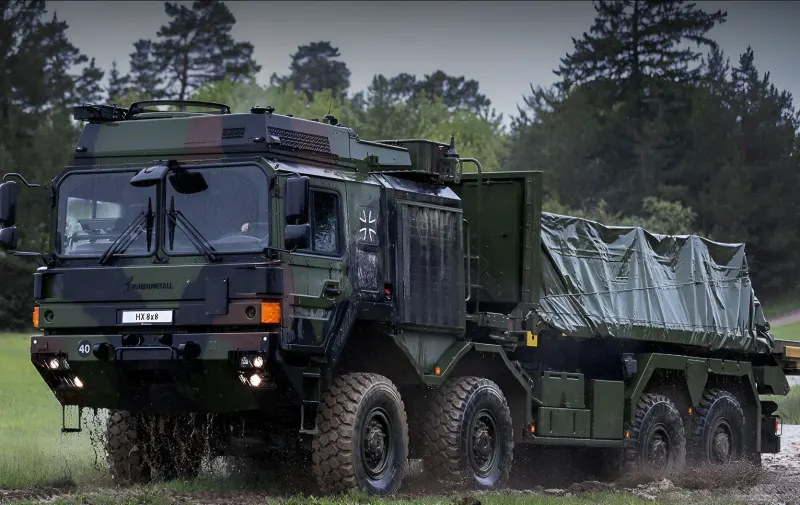
The German army is making a major leap in modernizing its logistics. The Bundeswehr has signed a contract with the Rheinmetall conglomerate for the supply of more than two thousand all-wheel-drive trucks. The deal amount has reached an impressive €1.015 billion, underscoring Berlin's serious intentions to enhance troop mobility.
Scale of the update
The order covers a wide range of tasks: from light transport to the movement of heavy cargo. Under the contract, vehicles of three main modifications are planned for delivery: 4x4 with a payload of 3.5 tons, 6x6 with 5 tons, and powerful 8x8 capable of carrying up to 15 tons. It is expected that about half of the order will consist of heavy eight-wheeled trucks, which will become the basis for the transfer of equipment and weapons.
Delivery schedule and strategy
This large lot is part of a more ambitious framework agreement signed in 2024. In total, Germany plans to receive up to 6,500 units of equipment. The official formalization of the current order will take place in the second quarter of 2026, and the first vehicles will begin to arrive at units in the first half of that same year. The main wave of deliveries should be completed by the end of 2026.
Technological advantage
The key factor in the choice was unification. Christoph Müller, CEO of the Rheinmetall MAN Military Vehicles (RMMV) division, noted that standardization of the HX family will allow the army to significantly optimize personnel training, operation, and maintenance processes. These trucks have already proven their reliability in the harshest climatic conditions around the world, combining high off-road capability with the durability required for military tasks.
Partnership with Ukraine
Interestingly, against the backdrop of expanding its own fleet, the German giant continues to express respect for Ukrainian developments. Previously, Rheinmetall management noted the high level of innovation in Ukraine, although it was not without controversial comments about the production of drones, which were compared to Lego. Nevertheless, technological exchange and mutual interest between partners remain relevant.


