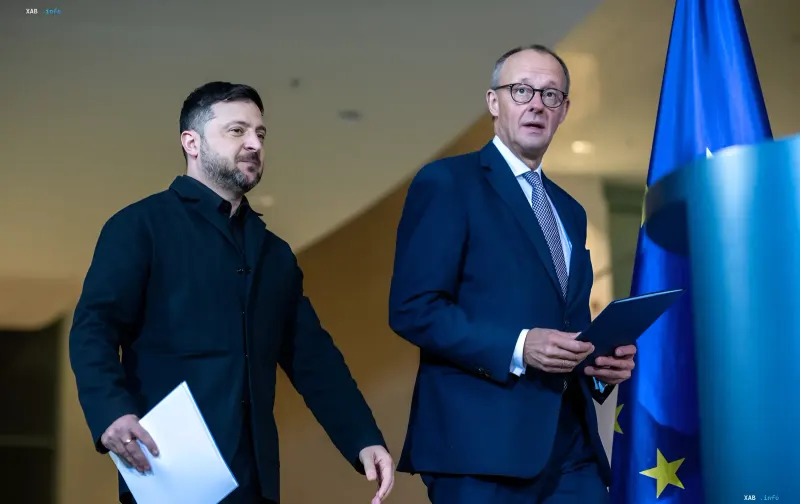
According to information obtained by journalists from insiders in the German government, Berlin is shaping a comprehensive package of response measures against Russia. According to anonymous sources, a significant strengthening of Ukraine's position on the front and beyond is being considered as one of the key components of this plan. In German government circles, media reports link the readiness for such steps to the Russian drone attack on Leipzig/Halle airport.
Context: Drone Attack on Leipzig/Halle Airport
As the publication notes, on September 1 Germany officially accused the Russian Federation of carrying out an attack at Leipzig airport. It was precisely this event, according to insider reports, that became the trigger for the accelerated development, within Chancellor Friedrich Merz's team, of additional pressure measures against Moscow. Against this backdrop, Ukrainian President Volodymyr Zelensky announced new packages of air defense systems from Germany, indicating the practical implementation of the stated intentions.
Strengthening Military and Intelligence Support for Ukraine
Insiders claim that Berlin intends to transfer additional shipments of weapons to Ukraine and, importantly, to expand the exchange of intelligence data for the effective destruction of Russian targets on the front and beyond. According to anonymous sources, the German side is also ready to help the Ukrainian side in determining the coordinates of targets for counterattacks on Russian territory. In parallel, there are statements about deepening cooperation between the intelligence services of Germany and Ukraine.
Expansion of BND Powers and "Active Measures"
According to sources, the Bundestag may soon support an intelligence services law that will expand the scope of "active measures" in countering hostile attacks. In the future, employees of the German Federal Intelligence Service (BND) may receive broader powers to counter hostile cyber operations, including access to the adversary's computers and servers and the deletion of stolen information. Intelligence officers, according to the same reports, may be permitted to intervene in supply chains — for example, by replacing individual components in cargo destined for hostile states.
Berlin's Diplomatic and Sanction Steps
The day before, Berlin officially announced the closure of the Russian Federation's consulate general in Bonn and the "Russian House" in Berlin, while, according to insiders, the German authorities do not intend to stop there. The Merz team, sources claim, will seek to have the European Union adopt tougher sanctions against Russia, primarily strengthening the fight against the Russian "shadow fleet" and tighter control over the entry of Russian citizens into EU countries.
Contradictory Data
It is important to distinguish between officially confirmed steps and information based on anonymous sources. Officially, Berlin confirmed the closure of the Russian consulate general in Bonn and the "Russian House" in Berlin, and on September 1 officially accused Russia of the attack on Leipzig airport. At the same time, the very formulation of a "revenge plan" and a number of specific measures — the expansion of BND "active measures," access to the adversary's servers, intervention in supply chains, assistance in determining target coordinates — rely on insider statements and are of the nature of intentions ("intends," "may receive," "will convene"), rather than on published legislative or government documents. Thus, part of the information reflects internal deliberation and future initiatives that have not yet been enshrined in official decisions.
Kyiv's Reaction
The Ukrainian side perceives signals from Berlin as confirmation of a course toward further strengthening of support. Zelensky's announcement of new air defense packages from Germany, against the backdrop of statements about expanded intelligence cooperation and sanctions pressure, indicates that the practical implementation of the discussed measures has already begun, although their full scope and timelines, according to insiders, remain a subject of internal deliberation in Germany.