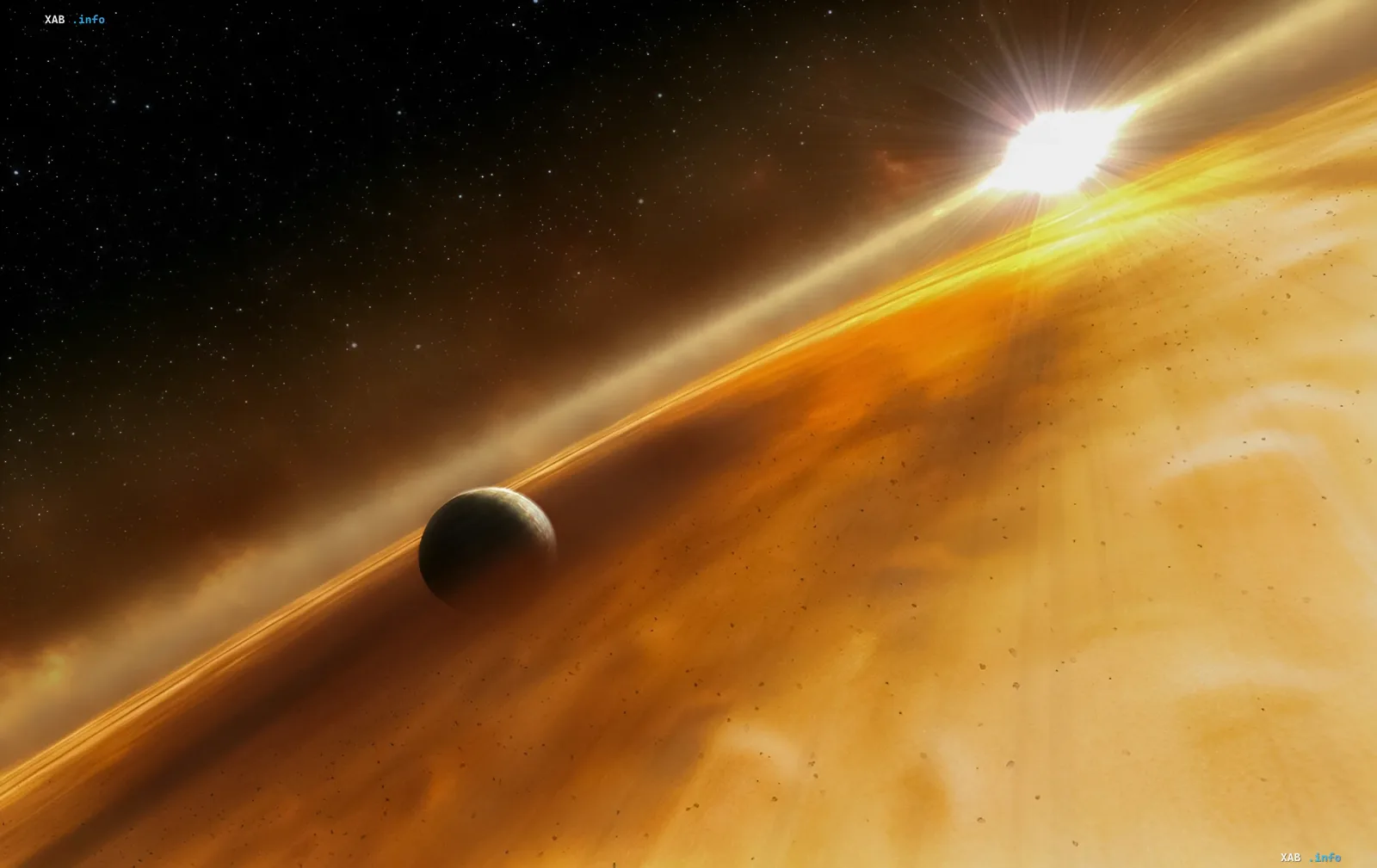
Astronomers from the University of California, Irvine, have re-evaluated data on the exoplanet GJ 3378b, which was discovered in 2024. A re-analysis revealed that this object is one of the most promising candidates for the search for extraterrestrial life. The research results were published in The Astrophysical Journal.
From Mini-Neptune to Super-Earth
Initial calculations indicated a planetary mass of approximately 5.3 Earth masses. Such a figure typically implies that the object is a mini-Neptune — a gaseous sphere with a dense atmosphere and extreme pressure, where life as we know it is impossible.
However, the research team conducted a series of high-precision observations using ground-based and space instruments. They recorded minimal stellar wobbles caused by the planet's gravitational influence. Thanks to this data, the mass of GJ 3378b was refined to 2.3 Earth masses.
This radically changes the status of the object. At this mass, the planet is highly likely to belong to the class of rocky super-Earths — meaning it has a solid surface similar to Earth's, which is a key condition for the development of living organisms.
Orbital Conditions
New measurements also refined the length of a year on the planet: it completes a full orbit around its star in 21.45 days (previously thought to be 24.73 days). Despite the fact that GJ 3378b's orbit lies much closer to its star than Earth does to the Sun, the planet is not scorched by radiation. The reason is that red dwarfs are significantly smaller, cooler, and dimmer than our Sun, so their "habitable zone" is located right next to the star itself.
By cosmic standards, the planet is very close — only 25 light-years from our Solar System in the constellation Camelopardalis. This makes it the most promising object for research within the so-called solar neighborhood.
Cautious Optimism
Despite the encouraging results, scientists urge caution in concluding that the planet is fully inhabited. The correct temperature in orbit does not yet guarantee the presence of oceans on the surface. Any liquid would instantly evaporate into the vacuum of space if the planet lacks a protective gaseous envelope.
Currently, astronomers do not have the technical capability to determine whether GJ 3378b has its own atmosphere. Small red dwarf stars can be extremely unstable. They regularly generate powerful flares and coronal mass ejections capable of completely "burning off" and blowing away the air layer from a planet that is too close.
This object lies right on the edge of the so-called cosmic shoreline — a hypothetical boundary where stellar wind destroys the atmosphere. Scientists will only be able to get a final answer regarding the presence of air and signs of life after the launch of next-generation large space observatories.


